
Whenever I came home for a visit, my mother would have a tub ready to soak my feet in. I pulled off the combat boots she barely tolerated and placed my feet in soapy water for fifteen minutes. Afterwards, she painted my toenails. This was her love language.
One of my first beauty lessons was at three years old, when my mother held my feet and tenderly painted my stubby toenails a bright crimson. When she showed me that first big toenail coated in red polish, I burst into tears. “No, no es sangre. No es sangre.” My mother tried to reassure me again and again. At that moment, I can imagine her vacillating between humor and panic, for toddlers don’t come with instruction manuals, and how do you convince a little one that they’re not bleeding from their toes. My mother painted her own fingernails and showed me again. See? Pretty. But I was inconsolable until she rubbed the color off with foul-smelling cotton balls. I was only a few months old, and not old enough to remember my very first beauty lesson when, true to Mexican tradition, my parents pierced my ears shortly after I was released from the hospital. I used my American passport for maybe the first time to cross the border from Tijuana back to San Diego, where a young woman was waiting for me at a Westfield shopping mall with a needle at the ready. My small earlobes were soon pierced with the even smaller spark of yellow gold. This was beauty rule number one, and I felt it long before I could understand it: que la belleza duele, beauty is pain––but the painting of my toenails gave me the most insight into what I would learn was my mother’s guiding principle: that beauty is the opposite of death.
My early memories of beauty are what I’d expect most little girls’ to be: pain, ennui and performance. It was the comb raking my scalp until my wavy, coarse black hair was tamed into a braided bun for my kindergarten graduation, the wetness of the eyeliner rendering me unrecognizable and unable to rub my eyes during dance recitals, the dress with the tulle petticoat that scratched my thighs while I tried to play tag at my tías wedding. But my mother’s experience of beauty was entirely different from mine.
She wasn’t much older than a toddler herself when my Tita Vicky said to her, “Va a venir tu mamá!” Mimicking my great-grandma’s excitement, she celebrated, but truly, she didn’t know the reason for such celebration. She didn’t know what a mamá was. It was my great-grandma who had raised her, who taught her how to iron before she knew how to read, who took her to the mercado de todos for the best and frothiest chocolate milk, who made her attend mass at the Catedral de Guadalajara, even if she didn’t want to go because it had an urn with the bones of a little saint girl and that scared her. A few days later, a lady arrived at their home. Her long legs were wrapped in beige pantyhose and her high heels would click-clack against the floors of their home. Her dress was tight enough to be flattering but loose enough to be demure. My mother’s wide eyes would scan past the lady’s body to her face, her angular jawline and her cheekbones, and finally, her hair styled at the salon, and perhaps worn that way for three to five consecutive days. If this was what a mother was, this young girl wanted to be just like that.
My grandma often brought colorful bead necklaces and bright yellow shoes for her neglected daughter. Plastic bangles and dresses that were too short by my grandmother’s next visit: these were to my mom the ultimate love language between a mother and a child––and my grandmother’s elegance and poise her greatest aspiration. But the child who was mesmerized by the sparkles and the spandex grew up. She went through puberty and fell in love and declared black to be her signature color while her mother went to church, raised a new family, and embraced sensible shoes in Los Angeles. Throughout the years, my mom made a list of the things she’d do differently. If she had a daughter, she’d never leave her with her grandmother to raise her. She’d dress her in the frilliest of dresses that she’d see her grow into, and she’d never leave her side as long as she needed her. And that’s exactly what she did.
My childhood never went unrecorded. There are hundreds of photo albums of me in golden ballet flats, with giant bows perched on my head, and of course, with my pierced ears, perfectly adorned. “Te traía como muñequita,” my mother used to say, and that’s what I looked like: my mother’s adorable little doll. Whenever we crossed the U.S. border, she made sure to prepare me for our shopping sprees with knee-length dresses and Mary-Janes. On my first day of kindergarten, my mom made a custom-colored bow to match the uniform and combed my hair into a tight ponytail. The synthetic smell of hairspray settling into my sinuses is among my earliest memories.
As I got older, it started to become obvious that I was not as mesmerized by beauty as my mother had been at my age. I hated it when my mom would put hot oil on my hair to leave it silky soft. I hated her coating my face in makeup, wearing bedazzled leotards, and feeling vulnerable in the changing room surrounded by other girls. But I hated it slightly less than how much I loved dancing. “La belleza duele,” I would hear her say––as she pulled my usually tangled hair, as I became a teenager and she wrangled my legs to get them epilated, and as I massaged my feet after the heels she’d bought me for my first interview had given me blisters––and I would come to resent how it seemed to exist for the mere purpose of causing pain, of being seen, of making me feel so uncomfortable in my body.
Throughout the years, I noticed that beauty was both a ritual and a religion to my mother. She’d douse her hair in hot oil and egg yolks on a weekly basis and constantly moisturize her hands with thick lotions. She would always make time to call me beautiful, even as I hoped to hear other compliments from her. And she never failed to leave the house with lipstick on, from peachy reds to dark burgundies. To this day, from time to time I’ll see a short lady hopping onto the 2 train, with red lipstick and a brown bob, and expect it to be my mother.
If my mother idolized her own mother’s elegance and beauty, I saw my mother’s as a permanent fixture in my life. Pero la belleza duele was never only about the physical pain. I saw how my mother wouldn’t wear skirts because they showed her blue and green spider veins crawling up towards her thighs, how she refused to have her picture taken because, through the years, her cheeks had lost volume, her eyes had crinkled and her face wasn’t a sight she welcomed anymore. I saw how she looked longingly at photos of wrinkle-free faces that she swore weren’t airbrushed or when she tried to convince me that the curls on shampoo commercials had been gently scrunched instead of blow dried. I thought I saw in my mother both a certain naivete that I had to protect her from and an intent to hurt me with her comments.
It didn’t help that beauty seemed to make space for me under too many restrictions. If femininity in a woman was the ideal, masculinity was something to be avoided. There wasn’t a worse verdict for a shoe than being deemed too masculine by my mother. And while my inclination towards sneakers and combat boots was barely tolerated, men shoes in women’s sizes was something I hesitated to suggest on mother-daughter shopping trips. Leather jackets were meant to hug your curves, not hang boxily over your shoulders. T-shirts should come with a bit of stretch to them instead of the thick fabrics I loved. My gender and my queerness, even before I had a name for it, had no room in the elusive world of the beautiful.
Like many teenagers, I went from rejecting beauty ideals as much as I could to engaging in a path to find my own definition of them. And when I did, it looked very different from my mother’s. She often negotiated with me to not leave the house dressed like that, and I often obliged. I wasn’t as interested in makeup by high school as my mom hoped I would be. Unlike many teenagers, I never rebelled, never pushed too hard. Rebellion felt too fraught to be aimed at a motherless mother who more than anything had wanted a daughter. A lot of our arguments were about beauty, and yet, entirely about something else. If only you brushed your hair, your beachy waves could look so good. If only you toned down your outfits, you could look more elegant. If only you endured the moist, sticky feeling of hand lotion on your skin, you could start preventing the dark spots and wrinkles you haven’t even thought about yet. To me, arguments about beauty started to become a reminder of how I didn’t measure up to what she’d expected of me. I was not slim enough, not straight enough, my personality wrong all together. To her, I was rejecting the wisdom she was desperately trying to share with me, rejecting the love language she’d seen from afar, but never spoken with her own mother. And her own mother’s abandonment was transposed into myself, and the fear of rejection became much deeper than what it looked like on the surface. Because, wasn’t rejecting her wisdom a few steps away from abandoning her as well?
My early twenties came with a deeper rift between us. While still maintaining a rare, close relationship, our arguments became more frequent, and more complex. After my first breakup, I came out to my parents to a less than lukewarm response.
“I think I knew,” she said quietly, almost to herself, after minutes of silence. “A mother always knows.
“You were never the most…” she trailed off. But we all knew what she meant.
This was the same year that I’d announced I’d been accepted into grad school, which meant moving away. Even as my mother wished to respond enthusiastically to the news, being abandoned by yet one more person was too much to bear. As Mexican parents, mine couldn’t have possibly foreseen any scenario in which I moved out of home before getting married. Equally as shocking was the fact that if I did get married, it would not be to a man at all. There was a certain coldness, particularly between my mom and I afterwards.
“When I cut off my hair,” I told my mother one afternoon, “I was afraid people would know I liked girls.” I was talking about a pixie cut I’d gotten a few years back. I was eighteen, straight out of high school, and I hungered for people to see me differently: a little less soft, a little more fearless and—if I dared to dream boldly enough—a little more handsome.
This was my white flag, putting all my vulnerability, my fear of breaking expectations, of not growing up to be who she expected me to be, in a language I knew she spoke. She was silent for a bit before answering.
“Don’t worry. Nobody could tell. And nobody has to know.”
And that was the last time we talked about it.
After tumultuous weeks, as my parents tried to absorb the shock of not one, but two bits of disappointing news, we settled back into our usual dynamic. Both my mom and I seemed to be acting more patient with each other. Me, trying to make up for wrecking their expectations, and her, either trying to make up for her reaction, or having forgotten about it altogether, or simply making peace because she knew I would be all the way across the country in a few months (not our country, but the country). When I dyed my hair pink, she told me it looked nice, even if I wasn’t sure she believed it. And when she coyly suggested I see a dermatologist before I left, I agreed.
I left the dermatologist’s office with a list full of the names of moisturizers and serums and sunscreen, and five-step routines for both the morning and night—nine-steps more than I was willing to follow. I maybe stuck to the regime for one week or two, before I tired of it and left all the glass bottles and plastic tubes in a travel makeup bag. The bag traveled with me to New York, relegated to some corner of my new home as I furnished my room, found the closest grocery store, and went to my grad school orientation. It remained there for months, while I got lost on the train again and again, and struggled to make friends with no success, and fumbled when people asked me “but where are you really from?” upon hearing my accent after I’d given them the easy answer: “California.” And it was still there when I realized how much I missed wearing colorful light sweaters, and video-game nights with my friends, and two-dollar movie tickets, and my dad, and—more than anything else—my mom.
I remembered the existence of that faded teal make-up bag mostly because I was looking for the face cleanser I knew was there, but upon opening I took out its contents one by one, and set them orderly on the coffee table in front of me: tiny glass bottles in bright green, amber and clear, plastic tubes full of thick moisturizers, two different types of cleansers. And I was reminded of the twin rows of products stacked on my mother’s vanity, some of them sister-versions of the ones I was seeing in front of me, and some only meant for her, for concerns I had yet to experience, most of which would eventually come with age. I envisioned my mother clearly, sitting in front of her vanity as she did every night: rubbing in her milky cleanser in quick, small motions, each circle slightly overlapping with the last; carefully pressing the palm of her hands, damp with product, onto every curve of her face; tapping her eye cream lightly in a half-moon on the soft skin around her eyes. Every night I’d seen this, and I’d grown exasperated at the patience of her movement, at the perceived futility of the task, but now I wanted it, or something like it. I wanted to be the echo of her choreography, reverberating across countries, unknowingly bouncing off each other somewhere in the middle.
I didn’t start the regimen that day. Or the next, or the one after. But I started incorporating the steps little by little into my daily routine. My technique was nowhere near as patient and graceful as my mother’s—my gentle pats were more like light slaps, my small circles basically quick rubbing—but it was slowly building a new bridge. I’d text my mother with my blunders, and she texted me back, happy to finally have someone to share her wisdom with. That was everything she wanted: to be everything she wished she’d had as a motherless child, to guide me in what she saw as the epitome of womanhood. We talked about the things we’d learned, the beauty tips she’d seen in Venga la Alegría or the ones I’d read online. We discussed whether oil pulling actually worked or whether she should get her eyebrows microbladed, and how, according to her, that did not count as a tattoo but mine did and I should definitely stop getting more because eso es cosa de cholos. I’d thought we were finally there, in the middle of the bridge, meeting each other halfway.
We started having face masks nights whenever I came to visit. From time to time, she’d mix her own masks, but more often than not, she picked one from the colorful jars in her vanity. She was partial towards the gold mask, which she spread throughout her face with a special silicone brush, all the way down to her neck. Her face glimmered, the emerald of her eyes reflecting against the gold flecks dispersed against her skin. Her careful movements reminded me how my mother approached skincare with a certain reverence, like communion, like prayer.
Every night, she’d spend one hour locked in the guest room praying, and another hour in front of the mirror carefully performing her skincare ritual: two hours of reverence for all of her deities. I chose her charcoal mask, spreading it using my fingers, deliberately missing the space under my nose and next to my eyes. “Te faltó acá y acá,” she told me, and my first instinct was to scoff, to be bothered by the fact that I was making an effort and even then, it wasn’t enough. But before I could roll my eyes or release an exasperated breath—before I could ruin the moment—she used her tiny spatula to carry a dollop of the charcoal goo and delicately spread it through the missing spots using her fingers.
We sat next to each other on top of her flowery, pale blue bedspread. For fifteen minutes, we said nothing, waiting for the face mask to dry. For fifteen minutes, we listened to the cooing of the pigeons outside fighting for a spot on the roof, and that slight buzz of the universe that you can only hear when everything else is silent. It was a fifteen-minute wordless conversation, in which I said to her, “Everything I want in life is to make you happy. And sometimes––like now––it’s so easy. And sometimes it’s so, so hard.” And she said to me, “Everything I want in life is for you to be happy. And sometimes—like now—being a mother is so easy. And sometimes, it’s so, so hard. But look at us now. We’re here, and we will live forever.”
#
On my twenty-fifth birthday, we went out for dinner as a family. My mom picked the place, a restaurant downtown she visited in her youth with a man who was trying to impress her. She seemed very proud about this fact. There it was again, that young self that she spoke of with exaltation. Her not yet faded beauty, a beloved memory. I wore a shapeless blue dress with pink and white flower buds peppered throughout. Fun, whimsical, and exactly my type. My mom wore a white embroidered dress, flowy and flaring at her ankles. She straightened my hair. I felt the heat at the nape of my neck as the hint of a charred smell reached my nostrils. I braided her hair, and her straight, thin strands brushed my fingers like silk. I expected to hear something about my hair being tangled or destroyed by the bleach while she straightened it, and she said nothing. While not permanent, this was a perspective we’d both learned we could adopt. For me, I could stop being too much nor not enough. For my mother, I could no longer be an extension of her, and her acts of love were no longer something I rejected.
On our way to the restaurant, we ran out of gas. We called my tío asking if he could pick us up and lend us his car, and we left ours by the side of the road. After dinner, when we came back for it, my mother stood behind the car while my father tried to make it start. The wind tousled her hair and made the skirt of her dress undulate over the pavement, and the moonlight cast an eerie glow over her. I saw some cars slowing down in the freeway, eager to see if there had been an accident, and suddenly, the image of me and my dad hidden from view and my mom standing by the road in her white dress became quite funny to me. “Mami...you look like a ghost,” I said. And we laughed together.
Nine months later, the missed calls, their bold names in red font plastered all over the homescreen of my phone. The WhatsApp notifications too, with texts from my family, left unanswered at three in the morning, pleading for my attention while I slept soundly for what would be the last time in years. Call me back. Are you there? Please answer. Your tío has bought you your ticket. American Airlines. Call me back. Call me back. All of them saying the same thing: “Come home.” The flight: a blur. The stewardess stopping by for the third time, insisting I have some Advil. “I hope you feel better.” “I also get terrible headaches.” “Oh you poor thing.” My tío Luis, finally picking up on the third ring before my second and final connection. “Yes, the doctor is with her right now.” What sounds like truth, only lies. Lying by instruction. Yes, a mother always knows, but a daughter always knows, too. But a daughter wants desperately to believe. Then, home. The San Diego airport with its familiar hallways and staircases. My same tío picking me up in the same minivan we’d driven just months before. Silence, except for the radio playing “Baby Shark.” Baby Shark, do-do-dodo-dodo. Driving down the 905, past the Kaiser Permanente in Chula Vista. Crossing through Otay, when the San Ysidro crossing leads straight to Hospital Angeles and Excel. Taking the very familiar route that takes us not to any hospital, as promised, but to my grandmother’s house where everyone from both sides of the family is gathered. No, not everyone. The silence ends. And then there’s the pain—the staggering, disorienting, searing pain of knowing you’re alone in the world, of the umbilical cord being severed for the last time.
“They told me I should bring them the clothes they will dress her in. Do you want to help me choose?” my father asked me.
I stood inside my parents’ closet. My mother’s clothes hung neatly in front of me. Funny, I always thought of her wearing black all the time—“tan elegante,” she’d always argue—but I was surrounded by a full assortment of colors and outfits I recognized: a red blouse with hot pink hibiscuses, a leopard print sweater, the same cardigan in green, purple and red, the white flowy embroidered dress, worn only once. She’d started wearing all of this in the last couple of years and I never noticed the shift until then. I’d been so focused on meeting her expectations that I’d never noticed her making the same efforts. I steered away from the black outfits and chose a baby blue matching outfit with dark blue flowers sewn in like constellations. She’d picked up the outfit on three different occasions only to leave it behind last minute before we reached the register. “Me recuerda a los sesentas,” she would say every time. The sixties, when she was young and motherless, the memory of that time somehow precious to her. I took the blouse and the pants off the hanger and placed them gingerly on my parent’s bed. I then looked up at the piles of shoe boxes she’d left behind. My mom spent her entire life looking for “the ones”—the pair of shoes that’d be comfortable to walk in, fit like a glove, and somehow still be the most stylish shoes she’d ever laid eyes on. She’d buy pair after pair, completely convinced for a few weeks that she’d finally done it, finally found them, only to banish them to the top of her closet shortly after, explaining how they started pinching here and there, how they constricted her pies de tamal, or how the heel was too short. The shoes I was looking for were not on the shoe rack.
They were a pair of black leather oxfords. She’d finally found “the ones,” the Goldilocks shoes she’d been wearing nonstop for nearly a year. I also grabbed her compression socks, dyed blue at the bottoms from wear. Hours later, my father came back with the compression socks and the shoes. Her legs had bloated so much, they wouldn’t fit anyway.
When I saw her, lying down, resting her head on a pillow of silk, wearing the clothes I’d picked for her, in an ironic reversal of roles, she was unrecognizable. Her face wasn’t simply overly done, but far too precise. Her eyeliner was sleek and crisp against her eyelids, instead of the shaky line that betrayed her bad eyesight. Her blue-red lipstick lacked the burgundy tones she favored and perfectly emphasized her cupid’s bow in a way she’d never managed to do. The wrinkle across her brow disappeared, something I’m sure she would have cherished. Even more so than seeing her, it was her makeup that made her absence most evident, just painfully obvious it was that she hadn’t done it herself. I’d never noticed how much I’d memorized the map of her face––the cartography of which colors she’d put where, the topography of which parts were sunken and which stuck out––until that moment.
During the service, I clung to my dad the entire night. I thanked every acquaintance and stranger for their words. From time to time, I’d have to comfort people who’d cry on my shoulder and said they never would have expected this, or how she’d been like a mother to them (but she actually was mine, I wanted to say. Did she ever massage almond oil into your hair, from root to ends? Or place cold sachets of tea on the bags of your eyes and changed them every fifteen minutes to keep them cool? Did her face ever light up when you showed her how nice that new dress she’d gotten you looks on you, as if you were the only light source in her life?).
Plenty of times, people would hug me, or I would feel obligated to hug them instead. And every single time––whether it was a man or a woman, an acquaintance or a close friend––I would breathe in the smell of their hair, for some reason trying to find that raw-egg-and-olive-oil smell from my mother’s weekly hair mask days. I would breathe it in, looking for a trace of her, as if they themselves had asked me whether their hair smelled egg-like the same way she used to. And every time I was disappointed, except for one. It was one of her long-time friends. I might have imagined it, but I like to believe that I didn’t, that she remembered learning about the hair mask recipe one day over brunch, and decided it was a fitting way to honor her. She would’ve loved that.
Close to midnight, my father encouraged me to say a few words. A singer had been performing my mother’s favorite Christian songs, a few of which I remembered her playing in the kitchen. She handed me the microphone, and I sat down on the platform, my mother’s enlarged black and white photo standing behind me. My father had picked a photo of hers where she had been close to my own age, and I hated it. I hated that I didn’t recognize this woman and I hated that she had haunted my mother into not wanting to appear on a photograph past thirty-five. I wasn’t exactly sure of what I would say until I started talking: I talked about her, how she would juice beets early in the morning to give to me for breakfast when she learned I was severely anemic. How whenever I came home, she’d have a tub ready to soak my feet in, and then paint my toenails herself. How she once sent me a jar full of pieces of Chocolate Abuelita, so I wouldn’t be homesick or have to break them apart myself. How she’d held me when I was eight, caressing my hair on our black leather couch after a midnight panic attack. How she’d always say, el cabello es el marco de referencia, hair is the framework of the face. Beauty had been so inextricable from who my mother was—and what I once saw as sheer vanity and a flaw, I now saw for what it truly was. That the language of beauty—one that had been so twisted by her own mother, and one that had hurt her so many times growing up—had been reclaimed by her. And when she passed it on to me, an inheritance I never thought I wanted, she’d been trying to filter it back into what it was always meant to convey: a mother’s love.
Back in New York, I had to adjust back to my new old life. Everything I’d been taught about being human seemed to have disappeared. I didn’t remember how to eat. I didn’t remember how to sleep. Sometimes, I forgot how to breathe. All of those things my mother had taught me almost 25 years ago, I’d forgotten how to do, almost as if she’d taken them with her. And now I was supposed to learn them again, by myself. Little by little, I did, but there was still one task that felt insurmountable. The bottles and tubes and jars and skin care and makeup still remained in my medicine cabinet. Suddenly, I was angry. Angry at being lied to, at the rows of serums still on my mom’s vanity, still intact after making false promises that I’d ultimately grown to believe. Angry that my mom had gotten to see me grow up, but she would never get to see me grow old. I looked at the glass bottles, and thought how easy it would be to break all of them, let them smash against the ground and make the shattering noises my mouth would never be able to recreate. But I didn’t. I let them remain where they were, and every night, I’d open the cabinet, waiting for the moment when I would be ready, when I could even think about opening the tiny bottles without choking on my tears.
A few months later, I looked at my reflection in my bathroom mirror. My eyes were puffy and my skin was simultaneously too greasy on some spots and too dry in others. But it was my hair that caught my attention. My long waves laid limp and frizzy over my shoulders, and the dark hair dye I’d use to cover up my sunflower-yellow ends had started to lift and look brassy (“cut it off,” I’d begged my father our first night by ourselves, “cut all the yellow off, and throw it out in a bag.” And he gave me money for dye instead). With my hair black and shapeless and my eyes empty, I looked nothing like myself. But I wanted to. I took a deep breath to calm down the pit that was starting to form in my stomach and plugged my hair straightener to the bathroom socket. The moment I felt it––the heat against my neck, and that first strand of hair, glossy and smooth, falling effortlessly into my open palm––I was transported across time, to my mom asking me to stop moving around as she tried to straighten my hair, to every school morning as hair bobbles snapped against my skull, to every castor oil hair mask worn impatiently under my mother’s heat cap. To every time she’d ask me to braid her hair, and every time she’d help me dye my hair bright yellow or dark purple if I helped her dye her gray hairs in return. To that time she helped me recreate those spiky-looking high-buns I’d seen in some teen magazine I was too young to read, while I watched Crocodile Hunter on canal once. And to that phrase she would say every time after she was done, my hair then perfectly straight, styled, yellow, or moisturized.
Throughout the years, I’d made a list of the things I’d do different if I ever had a daughter: I would remind her she’s smart and brave, and never pressure her into fitting any beauty standards, and let her follow her dreams wherever they might lead her, and let her love whomever she loved, or be whoever they wanted to be. But I knew in that instant––looking at my hair falling smoothly over my shoulders, my reflection looking a little bit more like myself––that I will also style her hair every school day until she can do it herself, and remind her she’s beautiful even when she doesn’t feel beautiful, and keep that recipe for the perfect hair mask in my back pocket in case she ever needs it. If I ever have a daughter, I will most certainly say to her: el cabello es el marco de referencia. Because my mother had always known something I’d just come to realize.
She would live forever.
Contributor Notes
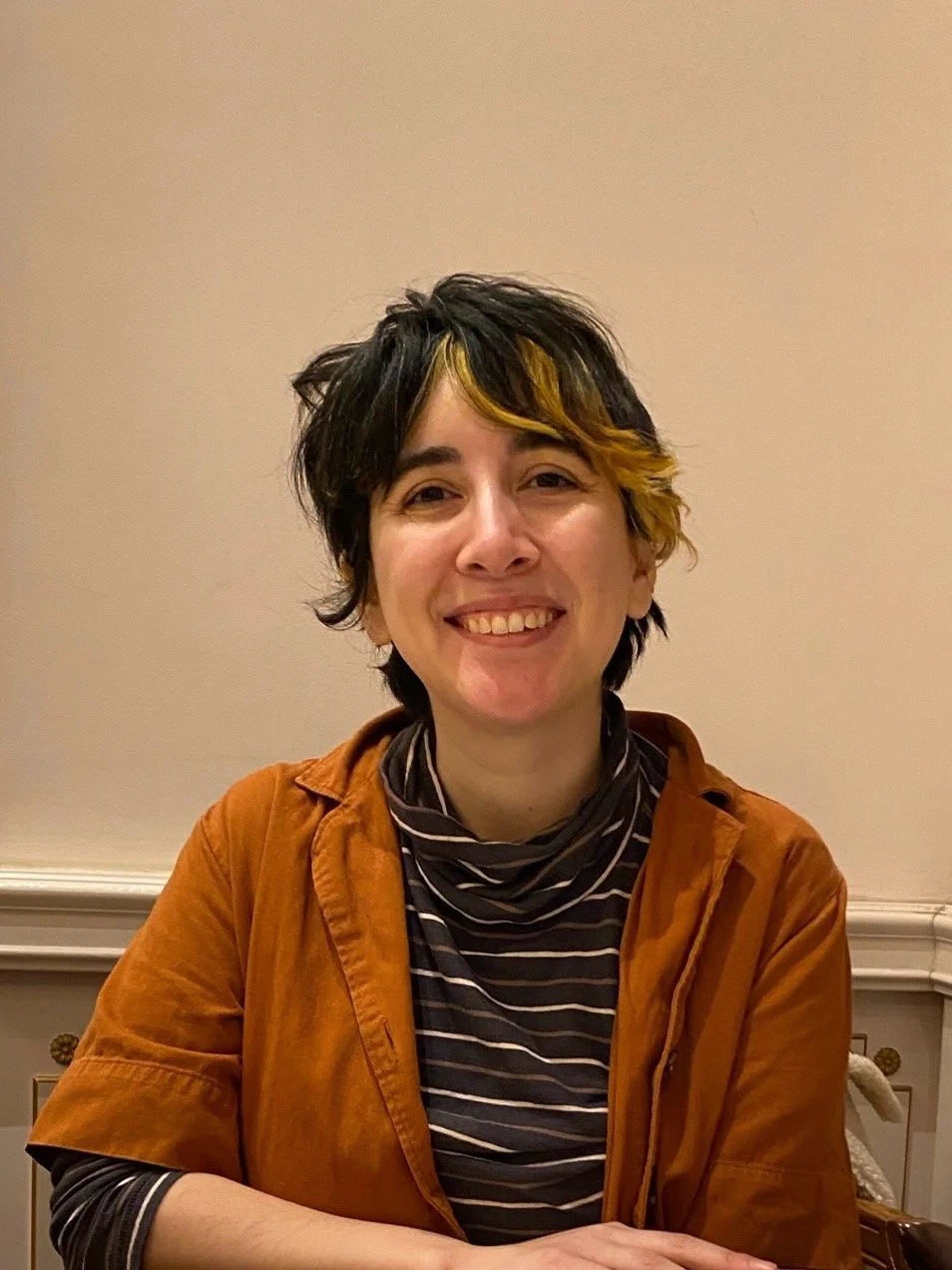
Arely Jasso is a queer essayist, editor, and translator born and raised in the Tijuana/San Diego border. They earned their MFA in creative writing from Columbia University and were a Kweli Journal 2024 Emerging Writer fellow and 2023 Tin House alum. Arely is based in New York City, where they enjoy watching animated shows, photographing bugs, and thinking about the immortality of the crab.