
Nairobi, 1998. MTV. Will Smith’s “Just the Two of Us” filling the living room. And me, ten years old, already knowing that Bill Withers was underneath it — warm and patient, holding the whole thing up. That is my funny superpower: I can hear a song and know immediately what it samples. Not just recognize it — know it in my bones, the way you know something that was put there before you had words for it. My father had put that knowledge there, long before either of us realized what he was doing.
My father studied in the US in the 1970s, and that was a big deal in post-colonial Kenya. His life there and his subsequent career success back home were always part of our family story: states he’d traveled to that I’d trace on maps, educational influences I didn’t yet understand, musical ones I absorbed without knowing it. Success and America became synonymous in our home — quietly, naturally, completely. All of that woven into my childhood. Curious little me couldn’t help but be fascinated, couldn’t wait to get there.
And get there I did — as an undergraduate student, then a graduate student, and now someone in the workforce.
But first: Nairobi. Because you cannot understand the leaving without understanding the place.
Nairobi has a sound before it has anything else — the buzz of motorbikes threading through traffic, the beautiful chaos of matatus, our minibuses, painted loud and moving louder. The smell comes next: mandazi and fried fish, warm tea, the mama mbogas on the street corners selling tomatoes and sukuma wiki from their wooden carts. And then the light. The way it hits red soil in the outskirts of the city and makes everything look ancient and alive at once.
Our house has its own world within that world. The smell of laundry drying in the sun — warm and clean and specific to home in a way nothing else is. In the garden, a bottlebrush tree blazes red against impossible green, and the Nandi flame burns orange at the edges of everything. Monstera leaves the size of my torso. And the birds — turacos flashing the red of their underwings through the canopy, weaverbirds busy engineering their impossible nests. Inside, afternoon sun catches the windows and throws light across the walls. From the kitchen, Kiswahili radio. From another room, vernacular television — Kikuyu, Luo, Swahili all tumbling through the house at once, the sound of a city that contains multitudes. And underneath it all, often, something American. America, finding its way in even here.
This is what I come from. This is what I carry.
I work in a profession that affords me the luxury of traveling back home twice, even three times a year — three months in Kenya, nine months here, in theory. My life exists in two places, and that is beautiful and bountiful. I am an educator, and during the week my life here fills up the way lives do — lessons, students, the rhythms of a school day. Connection with my family gets squeezed into the margins: a quick five minutes at lunch, phone propped against my water bottle, catching up across time zones before the kids come back from recess and I have to help solve a social dynamic or hear their wonderful stories about the games they played.
The weekends are different. The weekends I can breathe, and so can they, and we actually get to be together — even if together means a screen. One Sunday call stays with me. On their side of the screen: plates clinking, my nieces darting in and out of frame, my father reaching for more food, the Nairobi sun pouring gold across the room. It was so full it almost spilled out of the phone. On mine: a winter-dark bedroom and a radiator that would not stop hissing.
When we said goodbye, the screen went black all at once. One second: everyone. The next: my own faint reflection staring back at me. I knew that even after we disconnected, they would still be together — still laughing, still passing plates, still existing inside that warm, continuous noise. I would not. For a moment, I opened my laptop and looked up flights to Nairobi. Just to see. Just to measure the distance in dollars and hours. I did not book one. I closed the tab. The radiator kept hissing.
Same Sunday. Two completely different worlds. Both mine.
My heart split across an ocean — the geography of grief.
And it is not just the ordinary Sundays I miss. The geography of grief has a way of showing up at the moments that matter most.
I missed my brother’s wedding. Not because I didn’t want to be there — I wanted nothing more — but because my work permit was being renewed and I couldn’t leave the country. The bureaucracy of belonging. The paperwork didn’t care that it was one of the most important days of his life. I was teaching that day. Between lessons, during my lunch break, I watched small pieces of it on my phone — a notification lighting up with a photo of him in his suit, another of my mother smiling too wide in her fancy fascinator hat. I stood in my classroom, fluorescent lights buzzing overhead, and tried to make the moment fit inside fifteen minutes. The full ceremony I watched later, alone, in a different time zone. By then it was already over. Everyone had eaten. Everyone had danced. Everyone had gone home together. I pressed play.
I have four nieces. I missed every birth. They are nine, seven, four, and four months old. I have loved them from thousands of miles away, seen their first photos on a phone screen, watched them grow in the increments that video calls allow — a new word here, a lost tooth there, a personality emerging in the corner of a frame.
And here is the part that undoes me, quietly, on an ordinary Tuesday: I am an educator. I spend my days in the presence of young children, watching them make their cognitive leaps and emotional ones, present for the small and enormous moments of their becoming. I notice everything — the child who finally reads a full sentence, the one who learns to repair a friendship, the one who discovers they are braver than they thought. I am there for it. Fully, daily, there.
The same privilege that made this life possible — the education, the career, the work that brought me here — is the reason I am not there for mine. I am not just witnessing other people’s children grow up. I am facilitating it. I am nurturing it. Pouring myself into it every single day. And I am not there for theirs.
That is not a complaint. It is just the cost, named plainly.
It is not only the milestone moments. It is the little ones too. The daily walks. A meal together on a Tuesday. The ordinary texture of life just happening, side by side. The losses that don’t announce themselves until suddenly, quietly, they have added up to something enormous.
*
And then there are your parents.
There is a particular kind of love that children have for their parents — the kind that makes them invincible. When you are young they are the tallest people in the room, the ones who know everything, fix everything, hold everything together. My parents were that. Fully and completely that.
But time moves whether you are watching or not. And distance means you are often not watching.
When you live nearby, aging is imperceptible — it creeps. But when you only see someone twice a year, it arrives in jolts. A new slowness when getting up from a chair. Grey where there wasn’t grey before. A tiredness behind the eyes that wasn’t there last visit. Creases and wrinkles that arrived while you were away. All of it landing at once, in that first hour of being home.
The people who felt permanent and eternal are aging. And you are missing it in real time.
That is perhaps the sharpest edge of the geography of grief.
When my father turned seventy, we took a walk on the beach. Just the two of us, overlooking the Indian Ocean, warm sand under our feet, warm breeze, the kind of afternoon that holds still for you. I asked him what he was grateful for.
He said: being independent. Making all of us independent.
He said it with his whole chest. And I felt the pride of it, the love of it, the sheer size of the gift. He said he hoped to live longer than my grandmother, who passed at eighty-two. He offered it quietly, like a wish released into the warm air between us.
We don’t get walks like that, my father and I. My mother and my sister move through daily life beside him — the ordinary Tuesday walks, the small errands, the unremarkable hours that add up, slowly and without announcement, into a life shared. I have to travel 8,000 miles for an afternoon.
But what an afternoon. I stood there feeling the ocean breeze, taking it all in — and taking in the funny, costly irony of the whole thing. He had made me independent. Raised me to be curious, to seek, to leave if leaving meant becoming. “You are the boss of your own life, Njeri,” he had always said. And he had done it so well, so exquisitely well, that the very gift he gave me is the thing that took me away from him.
Not a complaint. A noticing.
And I flew to NYC a few days later. The distance reasserted itself the way it always does — quietly, completely. My sister made her first pilau without me there to taste it. My mother called everyone she loves, then packed a bag of maize flour and went visiting, showing up at people’s doors with her hands full, the way she always does. My brother figured out another side hustle for his kids and debated English Premier League standings with anyone who would listen. My sister-in-law sold braids, one after another, her hands busy and steady. My nieces did Girl Scouts and arts and crafts and showed up to cultural day at school in their finest. They are becoming. All of them, every day, becoming.
And my father took his daily walks without me.
Just the two of us, for one afternoon, at the edge of all that water.
The geography of grief.
Contributor Notes
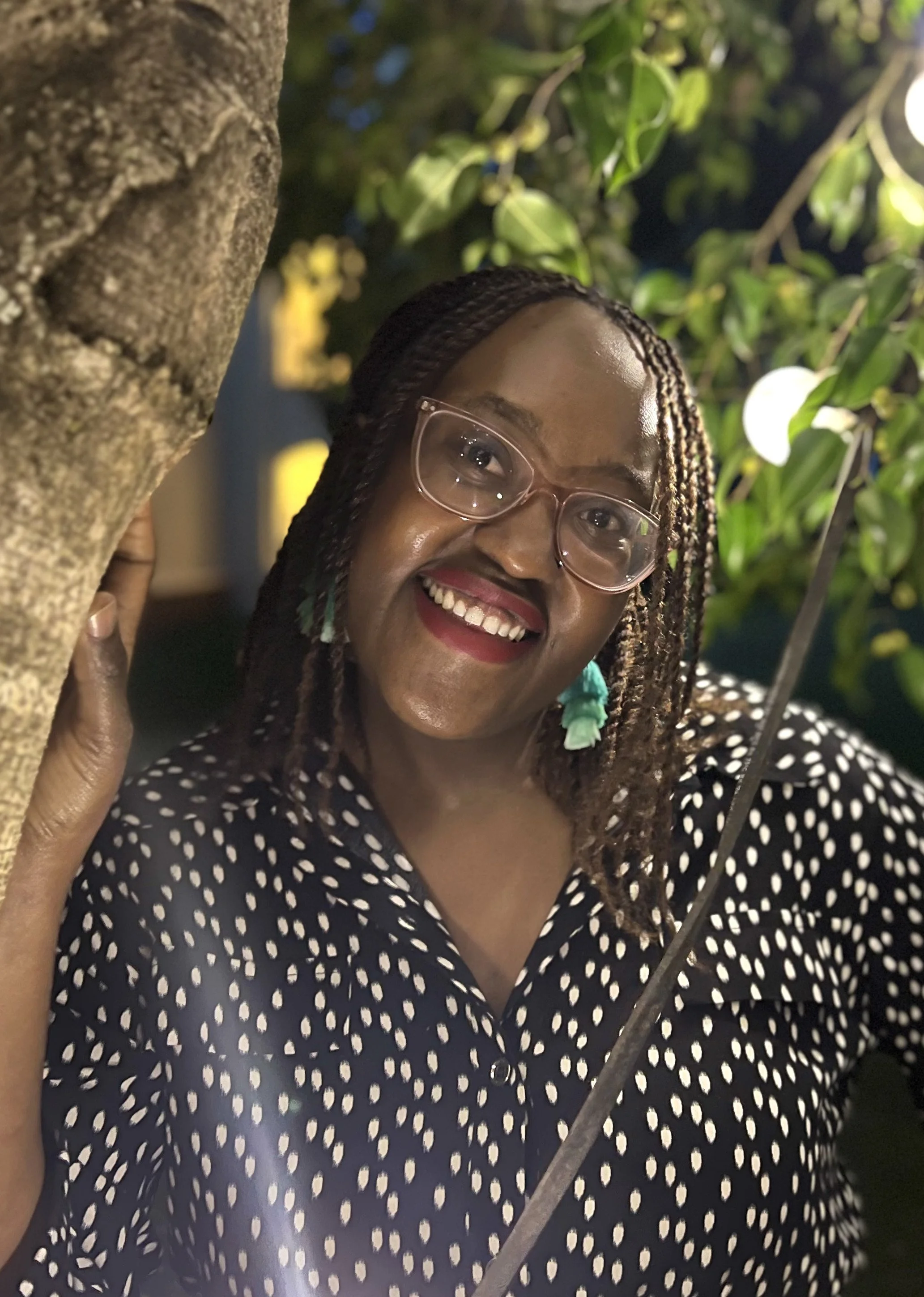
Njeri joined Bank Street in 2024, bringing over seven years of teaching experience in New York City independent schools. Originally from Kenya, Njeri Gachathi also spent three years teaching kindergarten in Vietnam before relocating to New York. Njeri is passionate about early childhood education and enjoys writing, jazz, board games, cooking, and discovering new kinds of tea. Njeri is a Kweli Scholar. The Geography of Grief is her debut work of nonfiction.