
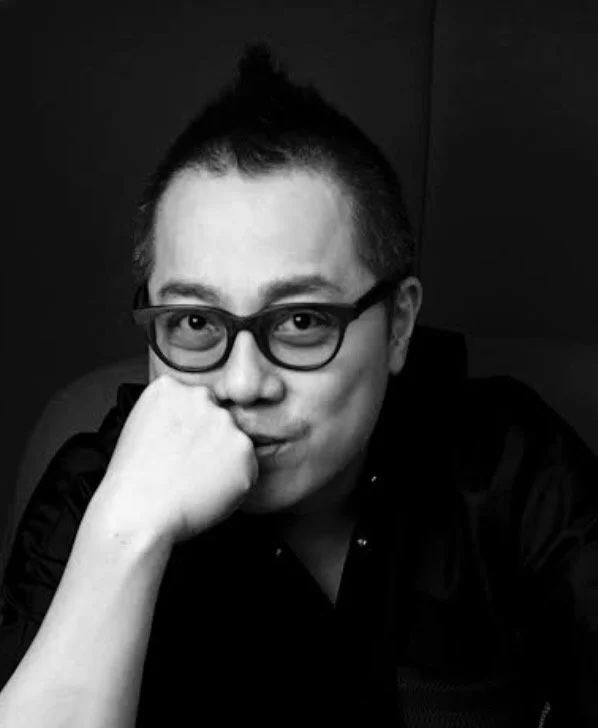
How does a director realize he's grown old?
It starts innocently enough—at a film festival, where a young woman rushes over, throws her arms around you for a selfie, and exclaims, “I grew up watching your movies.” Later, at a production meeting, an intern chirps, “My mom’s a big fan of yours.” And eventually, before an interview, a journalist says, “I really admire your work—you deserve a lifetime retrospective.”
In that moment, you don’t need a mirror—or a prescription for statins or Viagra to prove it. You are, unmistakably, no longer young.
An Australian restoration company wrote to me, asking if I’d contribute an introductory essay to a 25th-anniversary 4K release of my debut feature, You Shoot, I Shoot. Damn it—has it really been that long? It was just a scrappy little Hong Kong black comedy that made all of two hundred and twenty thousand U.S. dollars at the box office. What puzzled me most wasn’t the offer to restore the film, but the question it raised: had my scrappy little film actually attained a cult status?
In the past, whenever a magazine asked me to list the top ten Hong Kong cult movies, I deliberately left mine out. I mean, choosing your own film would feel grotesque—like giving yourself a standing ovation, or worse, dating your cousin.
But whenever I discuss this point with Peter Kam, the composer on my debut feature, he’d shake his head and insist I had no choice. By definition he insisted, the essence of a cult movie isn’t box office, critical success or the lack of it, or even cinematic style—it’s simply whether there’s a crowd of slightly unhinged devotees who refuse to let the film die.
And the evidence kept surfacing in all forms and manners. First, a porn distributor hijacked my title and poster for an X-rated knockoff—its only resemblance to my film being the film’s ad art and the plot, and apparently, a cast reduced to a threesome. Then, at the film’s tenth theatrical anniversary, a Hong Kong distributor hosted a screening, and I was startled to find fans traveling three hours from Guangzhou just to attend. And during the COVID lockdown in Beijing, the film‘s cult potential reached its absurd peak: admirers digitized the script, cast themselves, and re-enacted the entire film over Zoom.
By that standard, I‘m afraid, the verdict is clear. I had run out of excuses. The fact that anyone still remembers my little movie makes me feel like I ought to write something about it. But what? Perhaps the only way is to start from the beginning.
***
Thanks to two people, I was lucky enough to find my way into Hong Kong’s film industry. For the first, I’ll come back to him in due time. The second was my father’s mistress who was living in Mei Foo at the time.
After she had successfully attached herself to my father in the 1980s, he decided to divorce my mother. He—perhaps with her help—paid a lump-sum alimony that allowed my mother to leave our cramped government housing in Ho Man Tin and upgrade to a flat on the edge of Mongkok, in the Flower Market district.
Mongkok in the ’80s never slept. It was Hong Kong’s most densely populated neighborhood, a 24-hour jungle of cinemas, food stalls, neon lights, and noise. My mother worked as a social worker at a “girls’ home”, the closest thing we had to a juvenile prison. She worked rotating shifts and was rarely home at night.
I was twelve. My brother was thirteen, and our youngest brother, five. We were like postwar orphans—suddenly set loose, our days and nights ungoverned.
We drifted through Mongkok, filled with a restless need for amusement, but pockets nearly empty. Lucky for us, we found free entertainment through a generous flaw—in the local cinema security. Many theaters‘ back doors opened directly into back alleys. Entirely unguarded. No cameras, no ushers, nothing. So theaters like Kam Sing, Hoi Sing, Lai Sing turned into our own all-you-can-watch buffets.
Mongkok cinemas in the 1980s, is kind of like a Hong Kong version of a Times Square grind-house. A smoker could fog up the entire auditorium in seconds. A neighbor would unwrap baked pork chop rice, aroma thick as incense. A horny thug fondling his girlfriend with one hand while his knee jackhammered the seat in front. From the balcony, a cigarette butt might plummet like a meteor. If it hit someone’s head, that person would shoot up and attack by reciting a full ancestral curse. Counterattack: Coca-Cola shower. A sticky monsoon from the heavens. Rage extinguished promptly.
It was in a cinema like this where I saw A Better Tomorrow for the first time. For Hong Kong teenagers in 1986, A Better Tomorrow was the word of the summer—just like Grease had been for American boys in 1978. My brothers and I spent months reciting Chow Yun-fat’s lines as Mark-Gor and Ti Lung’s as Ho-Gor, arguing endlessly over who got to play Mark-Gor. This film opened my eyes to a new world of cinema. By the time I entered secondary school, I thought I’d found my calling.
At first, my dream was simple: I‘m not gonna be just an actor, but a star—like Chow Yun-fat. Then I discovered that this dazzling film was made by someone named John Woo. I had no idea what a director actually does, and have not a single clue on how to let him know I exist, but fate seemed to be giving me a sign: Woo’s office sat just a hundred meters from my building in the Flower Market on the second floor, a corner unit with its window facing the street, the words “John Woo Production” pasted on the window in bold black letters. I often lingered around his office, hoping one day he’d notice me and cast me as Mark-Gor’s long-lost son. Of course, nothing happened. Years later I learned Woo had actually moved out long ago; only the letters on the window remained, slowly peeling off the glass.
***
Films carried me through secondary school. While classmates fretted about exams—I wasn’t worried at all, I already knew my scores would be hopeless. But it‘s ok, no one cares if a star has a college education.
I auditioned for the Academy for Performing Arts—the only drama school in Hong Kong at the time. There was no doubt in my mind that my life was destined for stardom. But apparently destiny got lost somewhere between my self-esteem and my acne. I didn’t even make it past the first round.
To this day I’m convinced the judges had a vendetta against me. Or worse, they were too blind to see my potential. My first girlfriend at the time tried to comfort me with “You know, there aren’t many people who look like you on screen.”
What she said would be considered DEI hostile nowadays. But at that time—I just simply smelled the end of our relationship.
***
A friend later explained to me what a director actually does: He gives orders and everybody carry out those order! and—best of all—directors often attract women. At sixteen, that was all the explanation I needed.
That summer my father found me a job as a courier at the law firm where he worked. When my HKCEE (Hong Kong Certificate of Education Examination) results came back, my English grade was a “U”—Unclassified, which is worse than an F. It meant I couldn’t graduate from high school.
When I showed my father the results at the firm, I braced myself for the storm to break. But he looked at the paper with the calm of a condemned prisoner being escorted to the gallows—gentle, almost resigned, as if society had already carried out his execution.
Softly, he asked what I planned to do with my life.
I don’t know where I found the courage—perhaps it was his eerie calm—but for once I decided to have an honest father–son exchange. I told him I wanted to be a film director.
He stayed silent for what felt like an entire winter. Then, finally, he said, very slowly:
“Why don’t you learn to fix air conditioners instead?”
For God’s sake—what kind of father hears his son bare his soul, confess his one true dream, and replies with, essentially, air-conditioning repair?
Of course, that was my youthful outrage talking. Years later I realized my father was more like that guy in the ’90s who bought sneakers but never wore them, sealing them in plastic boxes. At the time everyone thought he was insane; later they hailed him as a visionary investor. Maybe my father was also a visionary who sensed that global warming would turn air conditioning into the growth industry of the century, and he wanted his son to stake out a position early.
Even now, every time I pay cash to AC technician comes to my apartment to refill the coolant, I think of that father and son conversation.
***
In the 1980s. There were no MasterClasses, no TED Talks on creativity, no “So You Want to Be a Filmmaker” workshops. My filmmaking theory came from manga where the best cartoonists like Fujiko Fujio and Osamu Tezuka, created both story and image; maybe directors should do the same.
I found a ten-session screenwriting course, in a City Entertainment classifieds ad—one hundred and thirty US dollars, a fortune. I flipped burgers to pay for it. The instructor, Lam Chiu-wing—who was also a murder victim in You Shoot, I Shoot.—taught less “how to write” than “how to survive.”
He described the Hong Kong film business of the ’80s, as an arbitrage engine: Films were pre-sold across Asia and beyond on a two-page synopsis plus a star’s name; overseas advances could exceed costs. Sharks followed. Triads from Taiwan, Holland, and Hong Kong mingled with cinephiles; output blasted past two hundred titles a year, peaking at over four hundred —averaging more than one new movie a day in a city of seven million.
Lam told us that a lot of pitches happened in hostess clubs, a boss would only give you two minutes. If he liked what he heard, he would peel off cash, sometimes a Rolex as a quick deposit, and he might even let you choose a hostess, any hostess, as long as it‘s not the one on his lap. Two weeks later you deliver a treatment; often he would vanish—arrested, exiled, or drunk into disappearance—and the quick deposit quickly became an orphan.
At sixteen, hearing about these colorful details of the movie business is like listening to a pirate describe Treasure Island—absurd, violent, misogynistic, yet irresistible in its promise of a rabbit hole. I decided to jump.
***
By the time I finally entered the media world in 1994—thanks to Lam Chiu-wing’s introduction—the Hong Kong film industry was no longer the glittering machine he’d once described in class.
In the early ’90s, the triads that financed films had grown increasingly reckless. Rival gangs would send men onto competing sets to drag away a leading actor for their own production—sometimes at gunpoint. Reels of film were stolen to sabotage releases; nightclub “negotiations” often devolved into fistfights, and occasionally into gunfire. One talent manager, after refusing to clear an actor’s schedule, found her apartment door chained shut and set ablaze while she was still inside. A studio boss was gunned down at his own office entrance—by a hitman disguised as a janitor.
By 1992, the industry had had enough, and organized a citywide “Anti-Violence March” that brought thousands of filmmakers into the streets. At the same time, the overseas markets that once devoured Hong Kong movies began to turn. Years of overproduction and uneven quality had overdrawn the goodwill built during the Bruce Lee and Jackie Chan eras. Buyers across Southeast Asia began cutting back on pre-sales; some stopped altogether.
It was against this backdrop—chaos and collapse—the so-called Golden Age of Hong Kong cinema that I began my film career—but the greater upheaval was yet to come, and it would reach far beyond the film business.
***
On July 1st, 1997, Britain handed Hong Kong back to China. That summer, a racehorse named “Smooth Return 97” took first place just weeks before the handover. By September, during another race, it collapsed mid-track with a shattered leg. The only smoothness left, perhaps, was the mercy of the veterinarian’s injection.
Like an omen coming true, not long after, the Asian financial crisis arrived. That was when I first learned the phrase “negative equity.” It meant that even if the bank repossessed and auctioned your apartment, you still owed them money—the property’s value had already fallen below the size of the loan. At supermarkets, the bags of charcoal for barbecues carried a printed warning: Treasure Life.
I hustled between production companies, writing scripts for their projects while pushing my own in hopes of becoming a director. The triads were still around, though their swagger had diminished—and their budgets too. By then, the standard meeting place wasn’t a nightclub like Club BBoss, one of those hostess clubs that Lam used to talk about—but the all-night cha chaan teng next door. A Hong Kong cha chaan teng is our version of the American diner: cheap, fast, and serving everything from French toast to fried noodles, with a side of nostalgia.
The perks had evaporated. Treasure Island was gone; cash deposits has become a myth; the promise of escorting home a nightclub hostess now only exists in the realm of psychosis. You‘d be lucky if your potential investor bought you dinner during the pitch. More often than not he’d order nothing but a lemon tea, which meant a young screenwriter with any sense of shame dared not order an entrée. Unless, of course, you were me. I developed a strategy: if the meeting was scheduled for nine p.m.—gangster office hours—I’d arrive half an hour early, inhale a plate of beef chow fun, have the waiter clear the table, and order a lone cup of coffee before the investor appeared. This tactic usually worked.
Except for the night when I waited for hours, only to find the investor never came. Past midnight, he finally called to say he’d been detained by the police over a stabbing in Mongkok. I checked my pockets, counting my remaining cash, down to the pennies.
***
I scraped together a living through whatever work would have me. Writing short columns, features, even horoscopes for magazines—“Misfortune will rain upon you this week; but your fortune will come courtesy of a—fill in your favorite astrological sign.”
I even do Radio plays, too, whenever they needed a script. On better days, I hosted finance TV shows, offering stock tips on companies whose shares I’d never owned. On weekends, I performed magic tricks for children in hospitals.
One morning at the radio station, where I hosted a three-hour program called No-Label 789with a group of media creatives—“no label” being Cantonese slang for having no faction or backer.
The term label came from triad jargon: zi tau (字頭), literally “character head,” a word once used to refer to gang organizations. Under colonial law at the time, such language was technically forbidden on public airwaves.
If the same word appeared in a film, the censors would instantly classify it as Category III—restricted to audiences eighteen and older.
To this day, I still don’t know how we got away with calling our show that—or why no one ever complained.
During the news-bulletin break, one of my co-hosts—Vincent Kok, who was himself a director and writer—stopped me in the corridor.
“You’re doing all these odd jobs,” he said. “What do you really want?”
I told him that back in secondary school I had already decided: I would become a film director. Everything I’m doing, I said, either paid the bills or trained me for that goal.
“If a chance comes up, I’ll help,” Vincent said. The news bulletin ended, and we went back to the studio.
The subject was never mentioned again.
***
Every time I pitched myself to production companies as a potential director, I heard the same refrain: You’re just someone who can write. Who says you can direct?
Daniel Yu—who produced Made in Hong Kong, a prizewinning film assembled from expired reels scavenged from other shoots—put it even more bluntly:
“Pang, you’re the only person on this planet who believes you can be a director. Why should anyone else gamble millions to satisfy your fantasy?”
I thanked him for his honesty. Then I emptied my savings—fifteen thousand U.S. dollars—and asked him to produce my first short film. He taught me the craft, helped me gather a crew, and even lent me one of his company’s employees, Wenders Li—whose name, he said, was meant to make people believe he was Hong Kong’s Wim Wenders—to edit after work hours. (Consent from Wenders was never confirmed.)
The trouble was, Daniel had made the same promise to half the film community, including Bill Lei, head of the Hong Kong Art Association. There were plenty of hunters but only one prey—an overworked editor. The promisees would loiter in Daniel’s office late into the night, waiting for Wenders to finish his day job. Whoever caught him on his way out got his free services.
Most nights I fell asleep on Daniel’s office sofa, only to wake and find that Bill had already kidnapped Wenders to cut his own project.
I used to wonder if Bill ever slept—or if he simply waited for me to.
After Bill, it was finally my turn to claim the free labor—except by then, poor Wenders was so exhausted he would fall asleep holding the mouse. Each time, I leaned close and whispered in his ear,
“Wake up. This is the ultimate test of whether you’re really Hong Kong’s Wim Wenders.”
Without fail, the spell worked like heroin—it bought me just enough consciousness from him to cut a few more scenes.
When I finally completed my short film, Summer Exercises, I dubbed it onto VHS, bundled it with my feature-length script, and sent it to production companies. The verdict returned was merciless: All right, kid. You’ve shown you can write a feature script and direct a short. But you haven’t proven you can direct a feature.
***
In April 2000, the Buenos Aires International Festival of Independent Cinema invited Made in Hong Kong. Daniel had no time to travel to the far side of the planet, but somehow persuaded the festival to screen my short as well. And so I was invited, and went alone. They even paid for my ticket—though, judging by the route, it must have been sponsored by a travel agency desperate to offload its least desirable itinerary. I was flown from Hong Kong to San Francisco, then to Florida, before finally landing in Argentina.
“Why San Francisco?” the customs officer barked as I stumbled off the plane. He was in his forties, broad-shouldered, the kind of man whose biceps alone could crush me into paste.
“Because… the festival arranged it,” I stammered in my broken English, shoving forward my printed itinerary and invitation letter like a talisman. “Final destination is Buenos Aires. Hong Kong has no direct flight.”
He narrowed his eyes. “But there are direct flights to Florida. Why stop here first?” His stare suggested he saw in me the bastard child of Khun Sa and El Chapo.
Thanks to America’s famously meticulous border security—and my lack of a U.S. visa—I was escorted into a small holding room to await my connection. For six hours, every movement was watched. Even when I went to the bathroom, an officer waited outside the stall door.
Being treated like a drug mule inevitably stirred memories of the times I almost became one by accident. Years earlier, a Hong Kong producer had hired me to write a script. After months of work, the project fell apart, and when I pressed him for the remainder of my fee, he summoned me to his office. He drew the blinds, locked the door, and slid open a drawer. From it he produced a bag of marijuana—souvenir from a Nepal shoot, he said—and offered it as payment in full.
“It’s worth more than your fee if you break it up and sell it locally,” he added proudly, as though he were cutting me in on some brilliant arbitrage.
I remember holding the bag, thinking: if I really walked out with this, and ended up in court for dealing, could I plead, “Your Honor, I only wanted to be a director”?
It was then I realized: the producer who tried to settle my fee with a bag of hashish; the night I counted coins in a cha chaan teng after a boss stood me up; The Asian financial crisis. It hit me that all this madess was raw material for a story—like ingredients for Korean army stew, everything goes in one pot. An idea was born.
In Buenos Aires the festival had scheduled parties, receptions, directors’ breakfasts. But I traded champagne for coffee: instead of mingling with movie professionals, I stayed in the hotel and wrote like a man possessed, and finally reduced that sudden burst of inspiration down to one premise: a hitman, broke after the Asian financial crisis, learns that his only paying clients—wealthy widows—want not just a death but a filmed spectacle of the murder. But he can’t shoot and “shoot” at the same time, so he needs to hire an assistant director. Now! That‘s different!
Well, maybe not that different, the concept of filming an assassin‘s work, actually came from Man Bites Dog—the fifteen thousand U.S. dollars Belgian mock-doc that put ethics through a blender, but it‘s an absolute killer concept. Only mine’s a lot funnier.
***
Back in Hong Kong, the premise became a full dialogue script in two weeks. I mailed my short film and the script to every company I could find—excluding the boss who’d left me counting coins. Silence—until Golden Harvest, Hong Kong’s Warner Bros. of the era, called.
The company founded by the legendary Raymond Chow, who had shepherded Bruce Lee, Jackie Chan, and even Teenage Mutant Ninja Turtles into the world. This wasn’t the sort of producer who hands you a bag of weed as your final paycheck. It wouldn’t just be a start; it would be royal succession in the Hong Kong film lineage. If you must be bitten into the vampire family, you want Count Dracula—not some nameless bloodsucker from New Jersey.
Knowing full well no one would notice, I still put on a fresh pair of socks before the meeting with its head of production, Gin Liu—a small, absurd gesture of respect. After all, this could be the meeting that finally made me a director. Gin was direct: “The story’s good. We‘ll take the script but hire somebody else to direct. You can write a couple more scripts for us. Two years down the line, we’ll see if you’re ready to direct.”
My throat felt sandpapered. I managed, “Who would you hire to direct?”
“Since this doesn’t look like a big-budget film—probably a newcomer from TV.”
I nodded as if someone had unplugged my adrenal gland. If they refused to let me direct even a low-budget film now, I’d be rejected forever.
Gin must have noticed my hesitation. She offered a ramp off the cliff: “Don’t rush. Think it over. The new CEO is starting soon, so we have to wait for his final approval to green-light everything anything.”
This put me in a dilemma. Sell the script, and take care of the rent. Refuse, and keep making a living peddling dubious stock tips for God knows how long. My then-girlfriend—who would later become my wife—asked, “Do you want to be a director, or do you want to be a man who just pays the rent?”—pure words of love. But I wanted both.
I was about to call Gin back, rehearsing a polite thanks but no thanks, followed by if I not directing, I am not selling—when the phone rang.
It was Vincent—the radio co-host who stopped me at the corridor and asked, “What do you really want?”
“I’m at a new company now,” he said. “Come talk.”
I asked for the address.
He said: Golden Harvest.
***
In his new office, on the wall hung Jean Guichard’s famous photograph: a lighthouse engulfed by waves, its keeper stepping out into the storm.
“My feng shui master says I lack water,” Vincent told me. “So I hung up something with a lot of it.”
Behind his new desk sat a stack of scripts. He gestured casually, in that signature offhand way of his: “The secretary says these are the latest submissions. My colleagues told me to read the one on top first. Said the writer’s a bit of a problem—he thinks he’s a director. I saw the name, and I laughed.”
Vincent staked his name on the film; though the company stayed cautious. They offered a condition for the project: shoot for two days, shut down for a week, let the brass watch the dailies. If I faltered, I’d go back to being just the screenwriter, and Vincent would take over. If I passed, I’d keep the director‘s chair.
At home, I spun my paranoia out loud. “What if the verdict’s prewritten? Two days of theater just to convince me to give up directing?”
“Believe me,” my girlfriend said. “Your script isn’t great enough for them to go that far. Just get on the bus frist.”
I said yes. We built a crew. Most of the cast came straight from my radio show: Cheung Tat-ming and Eric Kot took the leads; Vincent produced and cameoed; Chan Fai-hung agreed to play a part. For music I went to Peter. Years earlier—broke and frustrated—I rang his bell and told him that when (not if) I become a director, I wanted him to score my film, ideally at a discount. By then he was already one of Hong Kong’s most sought-after composers. He said yes on the spot. To this day I don’t know if he was helping a newcomer or just try get rit of me quickly.
Editing duties went to Wenders, this time with pay. For production design, Bill Lui, who can work without sleep—a saint of low-budget cinema. Our line producer, Kenny, taught me a principle that I still use: “Four million Hong Kong dollars sounds big until you break it down into 4,000 HK$1,000 notes. Every decision costs a stack. Count the notes you have left before you fall in love with an idea.”
The math left us with only fifteen shooting days. But like every first-time director I wanted to keep everything. Vincent insist on cutting set pieces we couldn’t afford, jokes that I‘m pround of but didn’t even make him smile. Then comes the Kok length test: he’d raise the printed script and just let it drop to the floor, he‘d listen to the thud.
“Too loud, cut twenty pages,” he’d say.
The next morning I’d bring back a thinner stack. He’d drop it—softer, satisfied—until that afternoon he discovered I’d merely shrunk the font and tightened the leading. The pages had shrunk; the script had not.
***
Kenny asked, “What do we shoot in the first two days—the big finale?”
I had no real confidence. Go big and I could blow the trick; play it safe and Mr. Chow might decide I didn’t dare to swing. In the end, I chose the opening hit, my little homage to Le Samouraï. I all but stole the shot list—at least I had a blueprint I could copy without shame. For day two, we staged the bar encounter: the hitman meets the so-called “assistant director.” Weighty enough to show intent, but not enough to drown me.
When we wrapped the second day, I nearly fell apart on set. If this was it, I would set a record for the shortest directorial career in film history.
The week that followed had the quiet dread of a death-row countdown—day eight, day nine, day ten—still nothing. On Monday, I dragged myself to the office.
Gin saw me and barked, “Hey, Trouble—why haven’t you scheduled the next shoot? And don’t you dare sneak in new scenes.”
I blinked. “Weren’t we waiting for Mr. Chow’s notes?”
She rolled her eyes. “He said—quote—‘Didn’t expect the kid to actually know what he’s doing.’ That’s it.”
Then, already halfway back to her desk: “Now move. And for god’s sake, no new scenes.”
I felt suddenly sheepish about my wild suspicions. I guess sometimes, things in life are just misunderstandings—like that Jean Guichard lighthouse photograph, the world sees a man who boldly open the door and step out into the raging storm, and into history. But he only did it because he thought the helicopter that the photographer was on came to rescue him.
I was lucky I opened the door. And then, there was a "then".
***
I cast myself in the final scene of my debut film. Wenders thought it was a Hitchcock homage. In truth, it was nothing more than my small act of defiance against my first girlfriend—a way to prove that my face, my presence, deserved to exist on screen. Looking back now, I can’t help but admit it was the film’s most obvious flaw.
From prep to final cut, I never get to meet Mr. Chow in person during the film‘s production. Golden Harvest’s production office was in Harbour City, Tsim Sha Tsui. Mr. Chow and the higher-ups, however, worked out of a tower on the other end of the same district—above the Peninsula Hotel, no less. That was the sort of place where James Bond might stroll through, not someone like me. In The Man with the Golden Gun (1974), Bond follows Andrea Anders from Macau to Hong Kong, and it’s at the ferry terminal that Agent Mary Goodnight informs him—all the green Rolls-Royces belong to the Peninsula. It was, even then, a symbol of another world.
For us, young nobodies barely getting by, that end of town might as well have been the moon. The Golden Harvest Peninsula office was like the holy land we never visited, our knowledge of what went on up there came back to us in shards, like fragments of gospel, from those who had made the pilgrimage.
Vincent relayed Mr. Chow’s verdict after watching the film: “Awkward kind of picture—unlikely to win prizes, unlikely to win box office.” Even so, he let the opening card read “A Raymond Chow Presentation”—a courtesy he extended to only a handful of late-career projects. Within two years, as I recall, his name had vanished from opening credits altogether.
Though he wasn’t exactly a believer, still, the company didn’t abandon the film. They put up a five-story billboard outside Elizabeth House in Causeway Bay. Wenders and I took a photo from the footbridge—proof that at least once, my dream had a physical address.
But when shooting began, though, my own blend of anxiety, arrogance, and cinematic delusion kicked in. Two weeks before the first day, I fired my cinematographer over what I called “irreconcilable artistic differences.”
“Kenny and Gin said you let him go before finding a replacement?” Vincent asked.
“Yeah.”
“You sure you know what you’re doing?”
“Sure.”
The film opened at August 16, 2001, and promptly sank. Most theaters pushed it to matinees, handing the 7:30 and 9:30 slots to sturdier titles. You Shoot, I Shoot became a Ninja Turtle irradiated, but without any kung fu to show for it—a joke with no punchline. Friends called it my Waterloo; I said Napoleon at least had prior victories.
Maybe it was time, after all, to learn how to fix air conditioners.
***
My girlfriend still believed in me. On September 6 we registered our marriage, with Vincent as witness. I told him I’d let Mr. Chow down. Vincent shook his head: “He still believes in you. Come in as a Creative Director—develop scripts, sketch your second film. The financial crisis is easing; more projects will come.”
It was then I realized what old-school Hong Kong producers were made of: a kind of dignity, a kind of grace. No hashish pressed on me as a last payment, no recriminations for failure—just the unthinkable: a second chance. In this world, what greater kindness could there be? Golden Harvest, as it turned out, was aptly named.
I joined the company at once, expecting to shoot again soon. Two days later came September 11, then a fresh economic wobble. For me, Golden Harvest became less a launchpad than a helicopter plucking a lighthouse keeper from threatening waves.
I stayed a year, left at contract’s end, still without ever meeting Mr. Chow. But the stability of a year’s steady income let me recover from the wounds of my first film and finish the script for my second. In 2003, Men Suddenly in Black opened while SARS, the 2003 epidemic, still lingered over Hong Kong. Most of the audience members who ventured into theaters did so wearing surgical masks, like a roomful of medical students fresh from an anatomy lab. Even so, the film earned ten times what my debut had made. Success? I’d say so.
In April 2007, 10ᵗʰ anniversary of the Hong Kong handover, I was summoned from set to receive the Best Debut Director of the Decade award. Mr. Chow sat in the front row. At last, I was able to thank him publicly.
After the ceremony, I approached him and shook his hand, explained that I had slipped out from filming.
“Congratulations, director. You did it,” he said, smiling. “Now hurry back—you shouldn’t delay the shoot.”
It was our one and only conversation. When he passed away in 2018, I realized I had never really known him—only his grace.
Someone from Golden Harvest asked if I would be willing to share a few words about working with Mr. Chow at his memorial. Of course I said yes, though I was surprised to be asked; most of the others speaking that day were longtime collaborators—people like Jackie Chan, who had worked with him for decades. Among all the filmmakers who spoke, I was probably the one who had exchanged the fewest words with him.
Once again, I slipped away from the set to say a few words at his memorial. I kept it short; if he had been listening, he would have told me not to hold up the shooting schedule.
***
In those days, Chan Fai-hung, the actor who played the producer in You Shoot, I Shoot, who was a co-host and the radio show producer of No-Label 789. One day, he asked me what I planned to do with my life when I turned twenty-four.
I said, “Scorsese once said a director should start his career before the age of twenty-five. I plan to make one film before I turn twenty-five, that and then kill myself.”
“You won’t,” he said, with the calm of someone ordering lunch. “By the time you’ve suffered enough to become a director, you’ll feel the world owes you too much. You’ll stick around.”
Three years later, I made my first film.
I was certain the film would change my life. And in a way, it did—though never quite in the way I expected.
All the vanity, the hunger, the innocence of that age—I pressed them into those ninety-four minutes. Watching it now, I see only a young man unaware that his youth was already slipping away.
Fai-hung was right. Now, at fifty-two, I still think the world owes me a lot, that’s why I keep taking statins.
Time leaves its mark on us, but the mark erases itself. The Hoi Sing and Lai Sing Theatres disappeared long ago. The Kam Sing Theatre—the one where Coca-Cola once rained down from the balcony, later rebranded as Newport Circuit—finally closed its doors on March 31, 2025. Hong Kong cinema, once a roaring factory turning out over four hundred Cantonese films a year, now, as of May 2025, industry chatter puts the number of new local shoots in the low single digits. Perhaps one day soon, the United Nations will list it as an endangered intangible heritage—if they care enough.
The only consolation, if one can call it that, is that this is not just a phenomenon for Chinese films. Even Hollywood imports are sinking at the Hong Kong box office. Cinema seats fell from about 43,000 in 2020 to roughly 37,000 in 2025—about five seats for every thousand residents. A few houses started their “first show” at 5:30 p.m., a schedule designed less for audiences than for the electric bill and payroll.
Hong Kong cinema has become a sunset industry; I cannot help but feel a sense of loss, a sense of not being ready to say goodbye.
But I still remember what Linda Lee, Bruce Lee’s widow, said in the movie Dragon: The Bruce Lee Story. “All these years later, people still wonder about the way he died,” she said. “I prefer to remember the way he lived.”
Perhaps this is what Hong Kong cinema means to me. It was the unlocked back doors it was Mark-Gor and his better tomorrow; it was the image of John Woo’s name peeling off a window he probably never stood behind; it was the smell of pork chop rice and cigarette smoke in a theater.
Film freezes time, while the filmmaker ages—but Film also freezes my memory of Hong Kong cinema’s glory days. When everyone is lamenting how its light has dimmed, I prefer to remember how bright it had shined.
(6265words)
Contributor Notes
Edmond Pang sold goods on the street and cleaned hotel rooms before going on to write and direct fifteen Hong Kong feature films. His work has screened in the main competition at the Berlin and San Sebastián International Film Festivals. He later began writing fiction and essays in English as his second language. He lives between New York, Tokyo, and Vancouver with his wife. This is his first publication in an English-language journal.