
1953
The moment Michel appeared in her salon for the audition, Faten wanted to kiss him, touch him, fingers against bare skin, grip the muscles of his arms, lay her cheek against his. The attraction was stronger than any she’d ever had, as though she were starving, and the only foods that could nourish her were his eyes, his lips, his body. He was supremely sure of himself, and his name—
Michel Chalhoub.
“Are you a foreigner?” she asked when he introduced himself.
“A son of a son of Lebanon, but I’m as Egyptian as you,” he said.
After the shaking of hands and kissing of cheeks, she could barely keep herself from grabbing his hand again, kissing his cheeks again. Neither would be proper. Kissing him on the lips would not be proper, even on screen, even for make-believe. She’d told Youssef so—long before she met Michel, when the young director put the Struggle in the Valley script in her hands and told her the heroine would kiss the hero in a climactic scene.
“Egypt would lose its mind,” she had told him. “This isn’t your California film school.”
“That’s why you should do it! They’ll line up around the block to see Faten Hamama’s first screen kiss.”
She threatened to back out if he didn’t take it out of the script. Still Youssef refused.
“We’ll leave the kiss and take things day by day. No one can force Faten Hamama to do anything, but what if you change your mind and see it my way? Don’t scoff. It could happen!”
His obstinance made her livid. Her husband Ezzeldine was between films himself and offered to have a word with Youssef. The circle of Egyptian directors was small. The two men knew each other well.
“Youssef needs you in his film more than you need him. Just back out.”
Ezzeldine didn’t understand what it was like to be an actress surrounded by male directors and male everything. Why should she be the one to lose the part? The sacrifice wasn’t fair. Nothing in the world was fair for women. She would fight back another way: Youssef said he had a candidate for the male lead, but she already preferred a young man they’d auditioned named Ramzi. He had a boxer’s build and hair a girl’s fingers could get lost in. She liked the idea of her love interest being played by a fighter, she said, but Youssef insisted that his actor could play debonair and naïve at the same time—less of an oaf than Ramzi. She quietly decided to reject Youssef’s guy as soon as he walked through the door.
Then she saw Michel. Her attraction to him was a pull stronger than Ezzeldine’s had ever been. Ezzeldine, whom she’d married in what seemed like an instant, a snap of the fingers, when she was sixteen. A child, really.
Now Faten was a woman, a wife, a mother. She willed the wave of longing to leave, prayed to God for forgiveness. She was a married woman. And Michel was Christian. Nothing about wanting him was proper.
She agreed to hire him for the film, but she had to hide her true passion. After the audition, as the paperwork and plans marched forward, she mangled his Christian name in every conversation with Youssef, pretending she couldn’t be bothered to pronounce it correctly, though she repeated it flawlessly to herself to help herself fall asleep at night: Michel Chalhoub, Michel Chalhoub, Michel Chalhoub. At Michel’s screen test, though the flash of his smile drew her like a magnet, she watched from afar, avoided speaking to him by pretending she had to rush off, and pretended to have doubts, wondering aloud to Youssef in a hasty aside whether this peacock of a man really was the right choice to play a humble peasant.
“Now that I’ve been around him more, I see he’s too English,” she said, with what she hoped was not so much conviction that Youssef would agree.
“It’s too late to change your mind,” Youssef said, his face questioning. “What’s the problem? We agreed he was perfect.”
“Nothing, it’s fine,” she said. “You’re right.”
As crews were hired and the script was tweaked and poked and prodded, she continued to insist she would not kiss her costar for a new, more urgent, hidden reason: a kiss might accidentally give away her crush. Youssef, though, still insisted, regarding the kiss, that she should wait and see. He wanted to push every boundary of Egyptian film, and he was determined also to film on location, to make the Nile a star of the film. They would fly to Luxor and film in the rīf and ruins.
The closer they got to filming, the more Michel haunted Faten. She found herself sighing at every little thing. At the phone ringing, four-year-old Nadia crying, the nanny never listening to reason. At Ezzeldine for bringing a box of quince home and sending the driver for his mother so she could transform the fruit into jam in Faten’s kitchen.
“Now? You want to create new chores while I’m preparing for a film?”
“What’s gotten into you? My mother will take care of it.”
Her childhood friends might have been threatened by their husbands with divorce for not wanting to toil in the steamy kitchen, but Ezzedline didn’t expect her to make the jam or be that sort of wife. She should appreciate his gestures of understanding, but they seemed to her, at times, less than magnanimous. They were underhanded slights at her womanhood. She was not a typical wife or mother, yet she knew for the women of this country, she was inspirational. She played women who struggled against society’s rules, spoke their minds, had love affairs. No one—no man—wanted to admit real women fell in love. She took pride in this portion of her work, her art.
Now, she was like a heroine of one of her films, caught between reality and her own emotions. One moment, she shoved thoughts of Michel away, the next something lovely would catch her eye—a petal in the shape of a heart on the sidewalk, Nadia’s tiny fingernails, the brightness of her mother-in-law’s jam, the crisply ironed crease of Ezzeldine’s trousers—and Michel had stepped back into her imagination to admire these details of the world with her. When she could, she drew her thoughts of him closer, luxuriated in them, shut the bedroom door to spend time alone with them. But it was impossible to be alone for long, away from the smell of boiling fruit, the ringing phone, Nadia’s tiny voice, Ezzeldine’s military footsteps marching through the house. Faten sighed at the tea kettle whistling and the jam jars dinging against each other as they boiled in the pot. At the nanny’s stubborn insistence on prattling to Nadia in babytalk at bedtime and mealtimes and always, though Nadia was already speaking in full, perfect sentences (“Mama, you are too busy,” “Mama, take me with you,” “Mama, what will we do today?” “Mama, I want to see the ruins, too!”). At Ezzeldine’s rants about Youssef’s inexperience, though this was Faten’s second film with the young director.
She sighed the most when she memorized her lines, sitting on the settee where she had seen Michel for the first time. She pictured Michel standing in her salon, completely unaware a rainbow from the chandelier had nestled on his cheek.
She didn’t tell Ezzeldine much about Michel because simply saying his name made her smile, and smiling made her think of his lips, and his lips made her think of kissing and how she feared kissing him, in front of the camera and everyone, would give her away.
She wasn’t supposed to fall in love with him, only act the part. In a week, she would see him in the flesh.
In Luxor, they stayed at the Winter Palace Hotel, a short walk from Luxor Temple, and Michel was no longer Michel. He’d taken the name Omar Sharif, and Faten liked knowing he’d listened to her suggestion, even though he hadn’t acknowledged it.
“The name suits you,” she told him near the end of dinner the first night in the hotel. “What do your mother and father think?”
Outside, it was dark, and the ancient Nile was just across the street. Nadia had dropped her head into Faten’s lap, tired after a long day of travel.
“They won’t find out till my name is on the theater marquee.”
“Until the name they gave you is not on the marquee, you mean.”
“No fear. I’ll be too famous for them to object.”
Youssef was going on about how Cairo believed itself to be the real Egypt, and Alexandria did too, but Upper Egypt, that was Egypt. “The extras we’ve hired, they’re the real fabric of this country,” he said.
When they’d arrived by plane earlier in the day, approaching Luxor from the north, Faten had thrilled to see the rising cliffs and a line of green along the Nile as it cut through the desert. The countryside was beautiful and she agreed with Yusef when he called it authentically Egyptian. The pharaohs had left their mark here and the common people, too, over thousands of years. But Faten had been born in none of the places Youssef listed. The real Egypt is all of us, she wanted to say.
Youssef had moved on. “Arabic has as many words for love as French has for food,” he was saying now.
Michel—no, Omar—shook his head and smiled, showing off the snow-whiteness of his teeth and the artful squareness of his jaw. Like anyone born striving, Faten recognized the born-and-raised wealthy, like Omar, how their clothes effortlessly fit them, their hair fell in place without much struggle, their teeth shone like pearls. For certain, he had never contemplated any future in which he amounted to nothing. Faten’s father had faced that fear for himself and his daughter, and he’d made it his life’s work to make her bigger than Michel or Youssef could ever be.
“You’re saying we’re better lovers than the French?” he said.
“Exactly,” Youssef said. “What do you think, Fattounah?”
“I don’t speak French,” she said. “I’m just a middle-class girl.”
“Hear, hear!” said Ahmed Khorshed, the cinematographer.
Omar winked at her, and all the feelings brought on by his presence squirmed in her stomach: nervousness, shame, embarrassment, eagerness, apprehension. Her heart drummed in her chest like a wedding march—or a funeral dirge.
Ahmed saw the wink, but he kept quiet. Faten smiled enough to answer Omar while not admitting much to Ahmed. It was fine, nothing important, just a wink. She stroked Nadia’s hair. The girl was fast asleep, her head heavy in Faten’s lap.
“It’s late,” Faten told the nanny, who lifted the girl and carried her off to bed.
With her daughter gone, Faten could attune herself even more devotedly to Omar. Though she hid her attention by keeping her eyes on her plate and eating a single grain of rice off her index finger, she sensed him, just as she could sense Nadia’s moods and movements. She could be wrong, she barely knew him, but he seemed bored, his face affable but unsmiling until Zaki Rustum’s football gossip perked him up. Omar had briefly been a footballer, playing on the national team, a tantalizing fact Faten had not digested before now. At Zaki’s mention of her leading man’s athleticism, Faten recalled walking behind him into the restaurant, stealing a look at his bum under his tailored, pressed trousers. The men argued about which players were best, the prospects of the national team, and, in club play, Zamalek versus al-Ittihad. Faten peeked at Omar’s shoulders, defined by his thin cotton sweater. His belted waist, which she’d glimpsed on the plane, was hidden now by the sweater. When their picture was released, women were going to fall in love with him all across Egypt. They were going to go mad for him, like Zulaikha for the Prophet Yusef. Even imagining their adoration made Faten jealous.
That night, she dreamed that before they saw him onscreen, the women of Cairo, and her fellow actresses, and the bread maker and the seamstress and the cabbie’s wife, all laughed at her for falling in love with Omar. She arranged a screening and handed them sharpened knives and potatoes, and when, distracted by his face and body and charisma, they pared the skin off their fingers and didn’t notice the pain, she was vindicated.
Just like Zulaikha.
Omar always had a book in his hands between takes, whether they were filming inside or outdoors, even in the heat. Whenever Nadia and the nanny were off playing or sleeping, Faten watched his slightly bent fingers turn the pages. Sometimes, he touched the tip of an index finger to his tongue and then to the corner of the page. How she longed to hold his fingertip between her lips, or to lounge next to him on the ground, her legs and torso lining his.
One day at the Karnak ruins, in the shadow of the great columns, she sat in her folding chair next to his and leaned over to look at him. “Whatcha reading?”
“Bridge,” he said, his head bent over the book. If she touched his curls, he might not notice.
“It’s a card game. Right?” She wasn’t one for games. She’d rather chatter all night with her friends, listen to music, dance, watch a film.
“I’m learning how to play. The best partners read each other’s minds.”
He kept two fingers between the pages, holding his place. Faten could tell he wanted to get back to reading; she wanted to distract him. She wondered how hard it would be. Did he really not want to flirt with her, or was he pretending, playing it safe? He liked to talk. By keeping him talking, she might get him to pay attention to her.
“Can you read my mind now?” She pitched her voice up an octave, brought her finger to her lips, and crossed her eyes slightly. Could he tell she was teasing him?
“Of course not.”
“Why don’t you read a novel?” she said.
“I got the book from the library, in Cairo,” he said, his eyes peeling away from the pages. “I’ve read the Russians, and I’m not in the mood for Proust.”
“You should master your lines instead.”
He put the book on his lap, cover facing up, pages flared open on his thigh to where he’d been reading, and slowly turned to face her, the hint of a smile at the corners of his mouth, like he was trying to hide the pleasure he took from being teased. Not trying very hard, though. For a long, fiery moment, he stared into her eyes as though looking for something he’d lost, as though he could reach into her soul and find it. Her hand went to the top of her chest; her fingers pressed against her throat as she swallowed.
“I expected acting to be nonstop action,” he said.
Inside her, another Faten was agitating, clawing herself up through belly and throat, trying to escape, ready to throw herself into his arms.
“If only you’d asked me. I could have told you acting is eighty-three percent sitting on our asses. When I was little, I studied maths between takes. I did all my schooling between takes. My mother made me learn to knit on set.”
“You’re joking.”
He brushed his puff of hair away from his forehead and it sprang back, not so perfect in the outdoor heat. She licked her thumb and reached out as though trying to pet a stray cat or fix a squirming toddler’s hair. This was the one concession she would make to Other Faten, the only crumb she’d toss. She pressed his forelock down and let go. It sprang forward.
“Are you calling me a liar?” she said.
He batted her hand away.
“You need pomade.” The makeup and hair staff, the errand boys, were watching and pretending not to. They might as well be useful. Faten called for a hair girl who’d been staring and took the brush and cream out of her hands. “I’ll do it myself.”
He leaned his head back. People were still watching, and she didn’t care. She rubbed pomade through his soft curls and then brushed. She leaned close to his ear. “I’ve never seen anything like—” She paused. Was she betraying her feelings? Her attraction? “Your hair.”
Having convinced his hair to behave, she sat back. He picked up his book and returned to reading. She sighed. He had his book; she had for the first time felt his hair between her fingers. They had each won. She wanted to carve him in stone, memorize him as he was at this moment, young and beautiful and intent.
After a long moment, he looked up, as though he really could tell she was thinking about him. “I’ve never known anyone like you before. All the women are cubic zirconium, and you’re a diamond.”
His eyes returned to the book. He licked a finger and turned a page. How had he not lost his place, when Faten was right here next to him, trembling and struggling to absorb the pure electric shock of having her fascination returned? People were rushing by; Youssef was calling her. She struggled to return the lid to the pomade, and called to a makeup girl for a towel. As she wiped her hands off briskly, she could barely hide the quaver in her hands, barely hide this wild energy—and fear—from everyone around her.
And yet also, relief: Thank God. Her infatuation was not one-sided.
But then, a reminder that her fear was not unfounded. Later that day, the nanny, who appeared to have watched their entire interaction as though she were at the Cairo Palace cinema, made a sly remark about husbands: “Some women think when we’re away from them, we can play.” Faten knew she should be careful. She had a little girl, and people would call her a whore to her face, in the street, right in front of her daughter. It had happened to other actresses, women who were nameless now. It was going to happen to Faten’s character, Amal, in this movie, after she spent one night nursing her wounded lover.
Faten willfully spent the rest of the day and the next few convinced she could resist the flirting game with Omar. When they were practicing lines or acting out scenes, she focused on reciting the script and playing her part, as she always did. Her stomach could stay calm; her eyes could meet his without darting away, without shame; she willed her legs not to turn to jelly when he stood near her; her fingers would touch the air without imagining touching him. She did all those things, went where Youssef needed her to be, listened to the nanny’s lectures about keeping Nadia out of the sun, called Ezzeldine daily, and worried out loud to the nanny, Youssef, the makeup girls, and anyone who would listen: What if Nadia toddled away from them, into the river water where there were snakes and bilharzia parasites and the possibility of drowning? God forbid.
There was so much to keep her occupied and safe from her own passions. If Omar was disturbed by the lapse in flirtation, he didn’t show it. He read his bridge book, talked about football with the others at dinner, folded his copy of Al-Ahram every morning into newspaper boats for Nadia and filled them with sweets. Between takes, when he wasn’t reading, Omar carried Nadia on his hip and toured her around the Winter Palace gardens, rubbing her little fingers against the rough bark of palm trees, pointing out the pelicans on the lawn and the peacocks in their cage. In the streets of Luxor near the hotel, he held Nadia on his shoulders to observe the men shimmying fearlessly up palm trunks to cut old growth away. There was a doll, a movie prop, which his character Ahmed hid under a mattress in the film. He let Nadia play with it, till the nanny had to yank it from her hands so the crew could shoot the scene where Omar retrieved it from its hiding place and stared at it, longing for Faten’s character. Later, to make up for not letting her keep the doll, Omar brought Nadia a bunch of yellow sugar dates from the Luxor souq and showed her how to eat them. He put one in her small, chubby hand, and held up another in his slim fingers. He took a bite. The inside was white, like sugarcane. He plucked out the pit and gave Nadia the rest of the fruit. She squinched her little face, as though she wasn’t sure what to make of it. The flesh was sweet, but not juicy. He smiled, and she smiled too, like he’d permitted her joy. Faten fell another meter for him.
“I wish there were a role for her in the film,” he said. “She’s the most beautiful child.”
Nadia’s beauty was visible to anyone, but the way he praised Faten’s little girl with all his heart—a mother had to love that. Still, her resolve to resist her attraction to him held firm a little while longer.
It was time to film the scene at the water wheel, after the two characters had left the village wedding together. A scene with only the two of them. So, much work outside in the heat was tiring; she was glad they could stand in the shade of the trees above the wheel. He wore the gallabiyah of a village boy well—he looked dashing, fellahi in a good way, as he skipped along the moving wheel, like Youssef told him to. So Egyptian. So full of innocence and youth. As they acted the scene, her mind kept stumbling into him. It was brilliant acting, the innocence, the sublimated desire. Omar was not as naïve or earnest or doomed as his character. He got what he wanted. She saw it in the way his eyes gripped a room like a fist. She’d sensed it the very first time they met, the day he came to the villa she inhabited with her husband and recited a soliloquy to get this role. In all her years in the cinema, she’d never seen an Egyptian actor so hungry.
The bony ox towing the water wheel was acting up, stopping abruptly and nearly tossing Omar off the wheel. It didn’t like the crowd of people necessary for filming. Omar recovered easily, impressing her with his athleticism, but Youssef didn’t want his star to injure himself, so the director stopped the action to huddle with the animal handlers. They were a couple of peasants he’d borrowed the beasts from. Meanwhile, she and Omar practiced their lines. He smelled like perspiration. Just being near him, she wanted to swoon. She wanted to ululate like an old auntie in a zaffah. Approaching them now, Youssef took his glasses off and wiped them with the hem of his shirt, as though he needed a better look. Then he asked Faten to walk with him. She reluctantly left Omar’s side, and followed Youssef a few steps away, out of earshot of Omar and the crew. Her gaze flicked back to Omar; he had the same look of longing on his face he’d had in character.
Youssef gestured for her to look at him. She focused on his concerned, serious face. Not a hint of smile on his lips or in his deeply intelligent eyes.
“I see what’s happening, Faten. If this crush between the two of you inhabits my film, my art will be the better for it. But if Ezzeldine gets mad, as he should, I’m not taking any blame for bringing the two of you together. I can’t shoot a fellow director in the heart.”
“There’s no crush,” she said. “Don’t worry.”
But she and Omar couldn’t hide their crackling energy when they filmed the next scene, where they walked among the ruins of Karnak Temple, past the partially flooded columns, hand-in-hand, and stopped to lean toward each other and all but confess their characters’ love across a crumbling stone block. The chemistry was so hot, that Youssef and the crew applauded them at the end.
Omar gave a deep bow, and said, “Get a bucket of water. We’re going to set your film on fire.”
Did he know he was quoting her? Did he remember what she’d said at his audition, about burning the screen? She touched her cheeks, and they scalded her fingers, as though with fever.
It was about this time, toward the end of filming, that the nanny, God bless her and keep her, decided a Luxor movie set was not the best place for a little girl and insisted on taking Nadia back to Cairo while Faten finished shooting.
“It’s her father’s doing, isn’t it?” Faten said.
The nanny refused to confirm, but Faten suspected she’d secretly phoned Ezzeldine to tattle about her harmless flirting with Omar, and Ezzeldine had offered the woman extra pay to bring Nadia home. Faten should have seen it as a boon not having a child to tend to so she could heap all her offscreen attention on Omar. But Nadia’s presence had given her a modicum of propriety, and Ezzeldine knew that.
She didn’t want to fight with him over whether Nadia should stay or go. She didn’t want to talk to him about it, to admit anything. She wouldn’t win. He’d just pay the nanny more. So, she hugged Nadia and said goodbye at the airport, not blinking when the girl cried all the way to the gate.
The first hour or so, Faten felt free. Then, that afternoon, after the initial sense of liberty wore off, she was jolted by emptiness, like when her infant was no longer in her belly. A severed limb.
When Omar and Zaki invited her to swim in the Winter Palace pool, while Youssef hammered out some vexing detail of the script in his room, she felt it might help her get over her malaise. The boys were already in the water when she arrived, Omar looking good in his trunks, and Zaki swimming laps. She felt a little shy in her bathing suit, which wasn’t usual for her. When she was in costume for the film, Omar had seen her shoulders, her legs. But he’d never seen so much of her before, and she wanted him to. The water was cool and calming, and a little breeze kissed her neck. The sun warmed her shoulders, and she wanted to touch him. She felt vulnerable, and that made her miss Nadia more.
“Why are you looking sad?” Omar said. He shifted downward, letting the water cover him to his shoulders.
“I miss Nadia, already.”
“The world’s empty without Nadia.” Now he rose, and splashed her a little—maybe to seem more nonchalant than his words would indicate.
He wasn’t a father. How could he know? “I should go home to Nadia tonight,” she said. “You can film without me for a few days.”
“Youssef won’t let you. We start early again tomorrow morning. And soon we’ll be heading back. It would be silly to leave now.”
Then, perhaps to distract her, he launched into a seemingly unrelated story about his mother’s friend’s car. A beautiful powder-blue convertible no one else in Egypt had. He’d harassed his mother ceaselessly. “I want that car. I need it. Don’t you think it should be mine?” His mother had shrugged him off. Her friend had just gotten the car—brilliantly blue, luminous as a noon sky—and enjoyed filling it with food and driving out of the city. For picnics. For joyrides. For watching fireworks over the countryside. “Baba can convince them to let me have the car,” he’d told his mother. And it was true, his father got on the phone to the friend’s businessman husband and, soon enough, the car belonged to his beloved son.
If Omar had meant to distract Faten from her troubles, the ploy was working. She imagined riding with him in that sky-blue car, their youth and beauty on full display.
“You’ll drive me in it,” she said.
“Oh, darling, I sold Lala off long ago to pay off a debt. We’ll get a new car. A Rolls. I promise.”
This ending to the story caught her off guard in the best way, as though she’d tripped and fallen and he’d scooped her up in his arms. He had envisioned himself one day driving her through Cairo in a Rolls Royce they shared. Foretold a day when they were together.
Zaki Rustum had finished his laps and was sitting on the pool deck with his feet in the water. He’d overheard the whole story, it seemed. “If Omar doesn’t get what he wants, he sulks until he gets it.”
“Any actor has to grab what he wants,” Faten said, splashing Zaki as hard as she could. He jumped into the pool and splashed her back, then all three of them were splashing each other, and to Faten, the world sparkled like pool water.
“I’ll do it,” she told Youssef at dinner that night. Omar was at the far end of the table. Nadia’s absence made Faten see that she’d gotten bored by now of being surrounded by the same faces all day and the same hotel staff every night. The white table cloths, the gilt ceiling, the candle light. None of it was home.
“Do what, my dear?” Youssef swirled spaghetti around his fork.
“The kiss.”
“I think it’s a bad idea. I’ve changed my mind, and we’ve changed the script. You’ll embrace him. Less controversy that way.”
“I want to do it.”
“Things have changed, Fatounah. Full stop.”
A plan was crystallizing in her mind. She looked toward Omar, her goal, her trophy, but he was not there.
“All right, Youssef-efendem,” she said. “You’re the boss.” She yawned, and said she was tired, and excused herself.
In the lobby, Omar was waiting on a love seat. “Come here,” he said. “I’ve got a surprise.”
She came directly in front of him and stood, knee to knee. His grin enticed her. She’d do whatever he wanted. He grabbed her hand and tugged her out the lobby and down the curved staircase to the driveway, where a car he’d borrowed from somewhere waited. Dark blue with a white hardtop. Not exactly Lala, but elegant nonetheless. Faten wasn’t dressed for a drive, but she went along with it—no Nadia to worry about—and didn’t ask where they were going. The sun was setting behind them, the sky softly darkening ahead, the palm trees like brushes painting the sky. As the pillars and sphinxes of Karnak Temple appeared, she joked about not wanting to be at the ruins at dark. Jinn, spirits, bogeymen could get them.
He promised they’d only stay a few minutes.
She was wearing crimson Italian leather sandals, much nicer than anything the costume department put on her feet; sand and grit got between her toes and all over the skin of her feet and the leather stained them red. The festival hall pillars were orange with the day’s last gasp of light. The warm air seemed to kiss and caress her skin. She stopped him, leaned on his shoulder, pried off one shoe, then the other, and shook the sand out of them. He put an arm around her to steady her and kept it there.
A tourist couple was still taking photos. Brits, Americans, the French—she could never tell them apart.
“They don’t know who we are,” he said.
Why did he act like the world should already be in his palm? She winked. “It’s you no one knows yet.”
He approached the couple, the man in shirt-sleeves and a fedora, the woman in a sweater set with a loose scarf around her head, both of them looking sweaty and thirsty. She understood a word here and there, “may I,” “photograph,” “of course,” “wonderful.” After the Europeans had posed with Karnak Lake behind them, and Omar had clicked the photo of them saying, “Cheese!” and handed back the camera, the woman spoke to Faten.
Faten concentrated hard, and caught Omar’s eyes. She couldn’t quite understand.
“She wants to know if they can take a picture with you. They’re Italian. I told them who you are.”
She’d heard him say her name among the foreign words. She was flattered, but also peeved that he’d revealed her identity without her permission. She stood between the couple, hands folded beneath her chest as though she were praying, trying to look as ancient and calm as a temple sphinx.
Afterward, she said, “They’re going to forget who I am before they even develop the film.” Secretly, she was relieved. Finally, alone with him in a place where pharaohs and queens had celebrated and worshipped.
“No one can forget you.” He kissed her forehead, and heat washed through her body. She pretended her sandals had filled with dirt again, removed them once more, and shook them out. They walked back to the car holding hands, and he dropped her off at the hotel to walk to her room alone while he returned the car to its owner. She was grateful no one saw them together, and yet she went to sleep grieving that they had to hide their attraction. Why did that have to be?
In the morning, she called Fadli, the studio’s photographer, in his hotel room. He was in Luxor to take publicity stills, and after ten years of working together for the studio, Faten trusted him. She made her request and promised to deliver an envelope of bills to his door.
“No matter what anyone tells you, you have to send the photo to the press. I’ll make sure no one knows it’s you.”
Fadli sounded worried that the studio would fire him. “What are you planning?”
“They’ll appreciate it in the end. I swear.”
In the final script, after her lover was shot, she was to hold him, press her cheek against his. When the fake revolver went off, as scripted, Faten jumped at the sound. Then, she rushed to him, embraced him, and her lips found his, naturally, as though he were truly hurt. She felt the surprise in him and then his surrender. He smelled of sweat and his cologne and tasted bittersweet, like tamarind.
She would never admit the truth to Youssef and the screenwriter, but they had been right from the start when they imagined a passionate kiss on screen. It would not have been realistic to have a woman fearing for her lover’s life, watching him shot and hurt, who then simply embraces him. She could not put her arms around him and not lock lips with him, not try to save him with her lifeforce, with her soul. If anyone tried to hurt Omar, she would kiss him with all her passion. Keep him in this world with her or make a memory of his leaving it that would never disappear.
When a scene was perfect, a fire crackled in her chest, a puzzle clicked in her brain. This kiss was going to change their lives.
“Cut!” Youssef yelled.
He sounded angry, and she knew she was about to get an earful. But she also knew this: He would use the take.
Contributor Notes
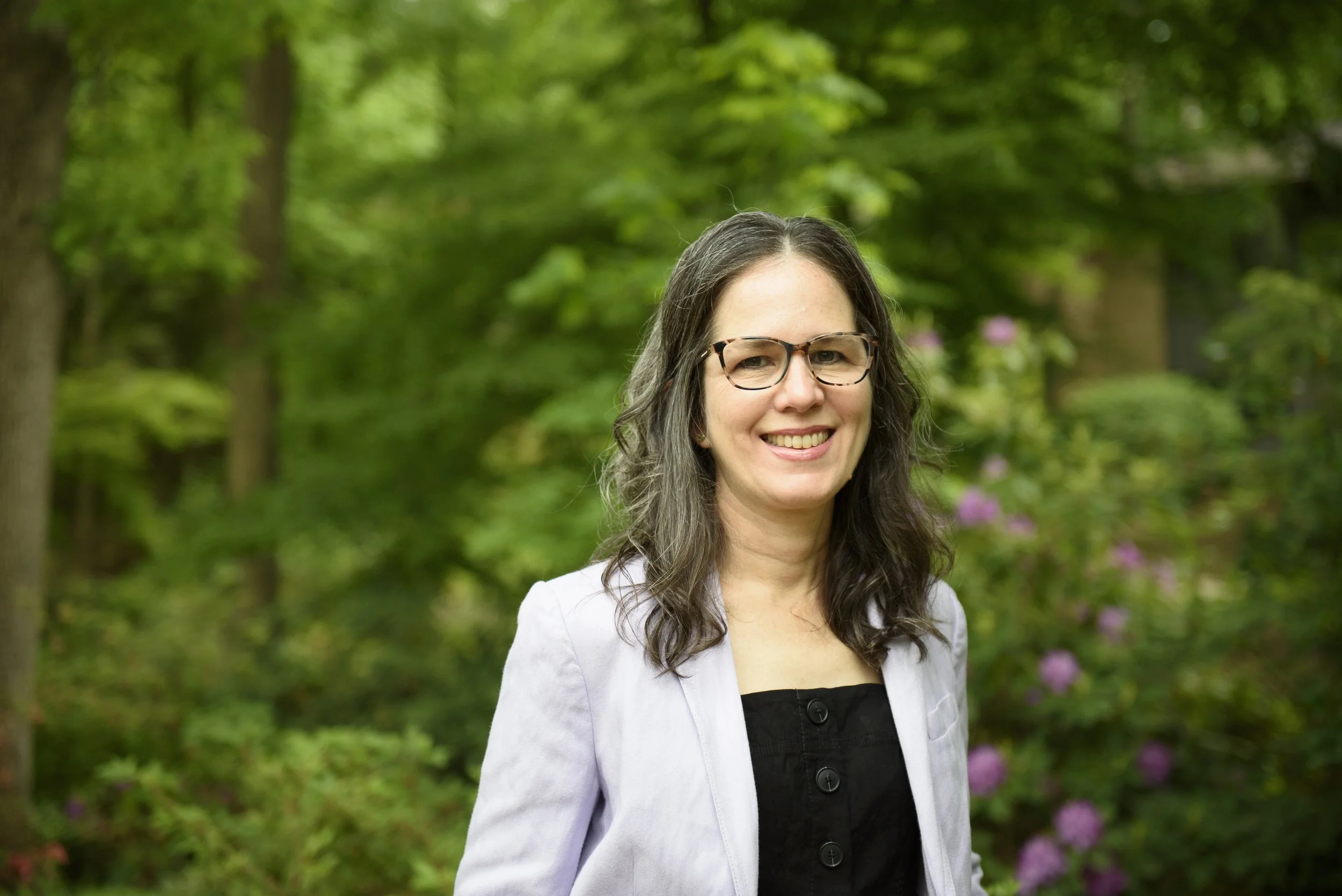
Eman Quotah is the author of The Night Is Not for You and Bride of the Sea, winner of the Arab American Book Award for Fiction. Her writing has appeared in Kweli, The Markaz Review, Mizna, Literary Hub, and other publications. She’s been awarded writing fellowships from MacDowell and Hedgebrook and grants from the Maryland State Arts Council and the Arts and Humanities Council of Montgomery County.
When she’s not writing fiction or essays, Eman is a communications consultant. She’s also the secretary of the board for RAWI, a community of Arab and SWANA (Southwest Asian and North African) writers. She lives with her family near Washington, D.C.