Tsamba likagwa manyazi agwira mtengo.
When a leaf falls, the shame will be on the tree.
Chewa Proverb
The problem was that our parents refused to accept our scores, pining instead after the 10 or so marks missing between our grade seven results and the provincial cut-off point for girls.
Many of them were office workers, freshly middle-class but still wearing the stench of poverty on their heads like a mother’s lochia on her newborn’s frantic fontanelle. They clung to these bloated dreams for their daughters, as if they would supplant their own unfulfilled ambitions.
When the Minister of Education released the national results, our parents took the acceptance letters from the Basic schools but rejected the implication: that their girls weren’t quite the flowers and stars their names had prophesied. That their girls would need extra help swallowing the Pythagorean theorem and linear functions.
Our parents performed nonchalance as they stuffed the letters into the bottom of their handbags and glove compartments. At home, they grumbled their Congratulations, then sketched out a plan over nsima and beef stew to get us into proper schools. Then, dressed in suits that glistened with the evidence of a hot iron, they strolled into the Kabulonga Girls’ High School, through the three-laned corridors, into the headmistresses’ offices to grovel.
The mothers with Barclays salaries that had enough zeros to secure second-hand Toyotas didn’t have to beg for long, if at all. A thick envelope, swapped for a head nod, was all it took. The memory of the headmistress’s corner office–the potted bougainvillaea lined beneath her window, which overlooked the quad, the flag of Zambia standing guard near the door, the lines of textbooks on the shelf behind her would all be shoved into the corners of their minds that hoarded unpleasant truths— like the lovers our fathers kept outside our homes despite all of the pastors prayers, or the uncle whose weekends in brothels had earned him an illness everyone refused to name.
The fathers with charm put their best Colgate smiles on display and pried out the headmistress’s empathy with compliments about how the dimpling of her cheeks made her look girlish, and was she sure she wasn’t one of the pupils?
The rest succeeded by sheer persistence, abandoning their posts, tending to ailing siblings, or vegetable stalls, risking theft of pyramids of succulent tomatoes, veiny sweet potatoes, and wilting pumpkin leaves. They camped in her office during her working hours, until the headmistress’s answer was filed clean of its sharp edges, until it morphed slowly from that stiff No to Well, maybe we can squeeze her in somewhere, but she must work hard to keep her place. The school was four decades old, and in recent years, it had garnered a reputation as a breeding ground for bad girls. Girls who lured men with the jiggle underneath their school uniforms. Girls who let those men give them rides in their air-conditioned BMWs. Girls who were later caught in the backseats of those vehicles, cotton underwear, and teenage reputation askew. But Kabulonga Girls’ was also located among the affluent, with their fenced-off houses, their gardeners, and their children who spoke only English, mother tongue discarded with sweet wrappers. To be educated there, close to those people, meant something.
The problem was, our parents nodded, agreeing with this condition of our acceptance, and came home to drum this not-good-enough-ness into us.
*
The sixty of us were bundled together on the first day and assigned to the room that had once been used to store cleaning utensils at the edge of the school grounds. Between the staff room and our class sat a splattering of preferable locations for our teachers— the crammed library that watched over the Parking Bay from two floors above ground, the gymnasium with faded outlines of a basketball court, the Tuckshop, where the aroma of used oil, fritters, and mince pies had marinated into the bubbled blue paint.
None of them wanted to venture past the ablution block, which didn’t need the TOILET sign etched on the outer wall, just to get to our room. In the end, it didn’t matter that someone had bothered to pick the letters BD to follow the number 8, hoping we wouldn’t seem out of place at assembly, standing next to the other classes, BA, BB, BC, FA, FB, FC, CA, CB, CC.
While the rest of the school learned, we weaved through the Jacaranda trunks, into the abandoned music room, and gathered around the piano with the missing teeth. There, we took turns playing while someone belted Faith Evans’ hook in Heartbreak Hotel. In the art studio, we voted for a model among us, then asked her to sit still on a stool at the front for the next 45 minutes. We attempted to recreate the contours of her face, the tiny boxes on her dress, the uneven holes in her socks, and then appraised each other’s handiwork.
The rest of the classes blurred—the teachers showing up when they pleased, beginning their lessons where they had left off in another classroom, and then telling us to catch up, when not enough hands flew up in response to one of their many questions.
By the third term, the whole school knew. We’d flunked every subject again, even Office Practice, where we were being trained to be secretaries to one of the other, smarter students one day. Those classes whose names were printed on their doors, like gifts given to children whose parents had planned their births, infused their class titles with meaning like a christening. 8BA morphed into Born Ambitious. 8BB became Born Brilliant. BC, Born Clever. FA, Focused & Ambitious. Fantastic Babes. Fabulous & Clever. Class Acts. Charming & Blessed. Because we weren’t in on the tradition, we were quickly monickered Born Dull.
Fuck them, we said, and concocted our own customs.
We ripped the used pages out of our Geography exercise books. We turned the rest into yearbooks, where we journaled with magazine cutouts and penned lofty dreams in cursive, reimagining ourselves as TV stars, journalists, globetrotters, mothers, and CEOs.
We celebrated birthdays by drenching the birthday girl with water– a revisitation to her entry into the world.
On warm days, we snuck out to the old Tennis Court, where weeds had colonised the lesioned asphalt, and skipped through games the way we did before we sprouted breasts and were forbidden from this kind of frivolity by our mothers.
If someone among us lost a parent, we slowly inched out of the school boundaries to find the nearest bus stop. There, we negotiated with the conductor for a group price. At the cemetery, we stood with our friend next to the gouged earth. We offered comfort with cooing sounds from a not-so-long-ago childhood and back rubs while she tossed dirt onto a coffin. And when the comfort failed, we held on to each other and wept.
On Thursday afternoons, after classes were over, we joined the cultural club, and learnt how to marry our waist movements to the curves in wound-up chitenge fabric. We attended the civic education club, parsing out the fresh feeling of amputation after three consecutive AIDS deaths in a once-upon-a-time family of eight. Sometimes, instead of extracurriculars, we ran through the shrubbery that veiled the school buildings from the teachers’ compound, out onto Chindo Road, and into Melissa Supermarket for piping loaves of bread we doused in margarine.
When our report forms were due for collection, those of us who were too afraid of our parents’ wrath hired a man walking by the school fence to play guardian. The rest of us giggled as we watched, betting our pocket money on whether our teacher would see through the disguise. He never did.
When the grade nine exams were within reach, our parents started tossing words like sacrifice, and discipline, and why can’t you be more like your brother? at us about what they expected in the months ahead.
*
We are on the quad, being throttled by the sun as we wait for the weekly announcements and the National anthem. The mock exam results have just been released, and the headmistress says she is very proud of all her girls, Except for 9BD.
In the assembly line-up, we are at the perimeter of the school. Just like our classroom, just like its naming, just like our scores.
9BD, she bellows, glaring at us, ensuring the rest of the school swivel their heads too, before saying, is the most notorious class in our school.
We are used to the private lashings in our broom closet near the school exit. Those small humiliations are just another part of the routine, like the bells that chime after each period.
Notorious etches itself into our minds, like a grandmother’s sharp blade tattooing the medicine of old into a sick child.
The pain of this word, like that stainless steel laceration of flesh, burns for a blinding hot moment.
And then, somebody in our line says, No!
The quad is still silent, so, although they do not shout, their voice has wings and carries.
Another somebody grabs it and echoes No!
The third No! is a practised chorus from last week’s time in the music room, where the piano sounds had been replaced by a smuggled radio playing the same song from Biggie’s Born Again on a loop.
We know what comes next. We’re no longer afraid of this shame she wants to blanket over us, so the rest of us answer, No, No, No, Notorious!
There will be a month-long period of atonement, filled with the sound of metal slashing through overgrown blades of grass, and our groans as our palms blister in the process. In class, we will be required to kneel at our desks instead of filling the hard wooden bottoms. But after that, there will be no ignominy.
And when the next national exams come, frightening as they are, we face them as though there is no extra weight on our shoulders. And this time, we pass.
Contributor Notes
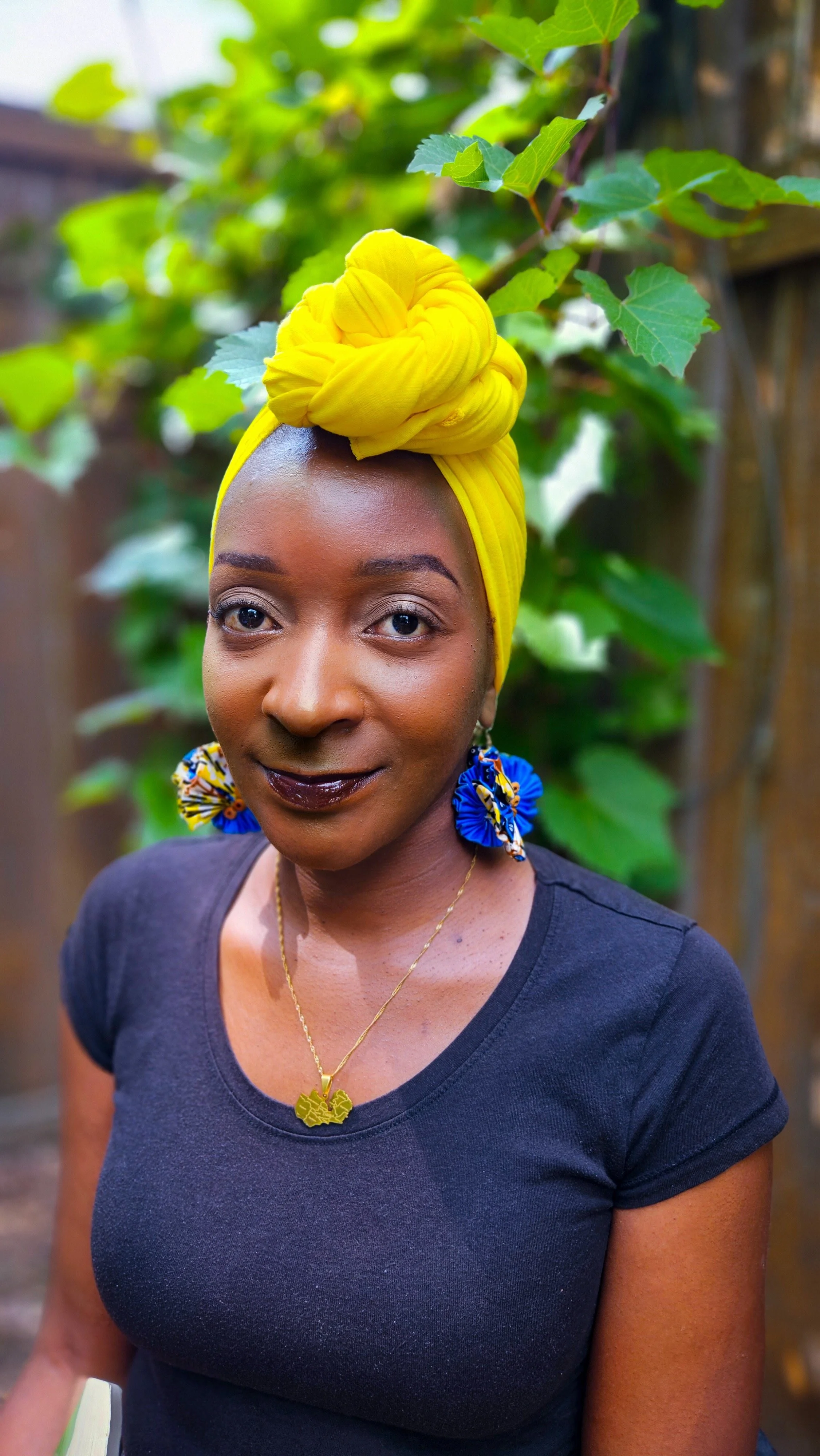
Mubanga is the multi-award-winning author of The Mourning Bird, Obligations to the Wounded, Another Mother Does Not Come When Yours Dies, and The Shipikisha Club. Her short form work appears in The Hopkins Review, adda, Contemporary Verse 2, Kweli, Overland, on Netflix, and elsewhere. She teaches fiction at Hamline University.