Watch one woman hold her keffiyeh from the Jerash refugee camp
and saris from her naani’s pre-partition almirah in Rawalpindi
like two lifelines.
Chords of jasmine and sweat, burnt trash air and deep longing
for land rise as one breath. Tatreez like ajrakh, and ancestral memory
woven into every indigenous cross-stitch.
Khadi-keffiyeh politics please save her from the airwaves that
say BJP and IDF are their beloveds.
Partitions were born seconds apart and the colonized can time
travel. We clearly see genocide when empire sells it as oasis.
We peel pomegranates, each seed carrying ruby ancestral secrets
of liberation.
We stare at the same azadi moons, eyes wide with decolonized
dreams.
See construction workers on Indian shores sacrifice bread, bodies
as boycott. Hear hope strumming to strings of the oud and rubab.
Ghalib and Ghassan weaponize words against empire,
and yet India becomes the largest consumer of Israel’s guns.
Watch this woman land at San Francisco International Airport
in a zombie body so distracted by white burial shrouds and ash,
her purse is left orphaned on a taxi bench.
Police and sterile bureaucrats always laugh at what is lost.
Watch a Palestinian couple frantically search for the woman’s digital
footprints. Taxi driver husband who labors for a land that funds the death of
his relatives, cares for an abandoned purse like it is his child.
Somewhere between Arabic, Urdu, and an English that ulcers in their mouths
they meet. With the same feeling when relatives wait for hours at the Delhi
airport gate in their most ironed saris and suits with flowers. In the way a cousin in
Jalandhar remembers the exact time stamp she visited their ancestral village
twelve years ago.
They hug and cry as if their freedom fighter ancestors divinely set this up.
To share notes of curfew and bloodied barbed wire fences in Kashmir
and Gaza, forced starvation campaigns across West Bank and West Bengal.
They call it famine, as if our land is naturally depleted of abundance.
And then the taxi driver husband says: “Habibi, please search your purse
so you know we did not take anything from you.”
Contributor Notes
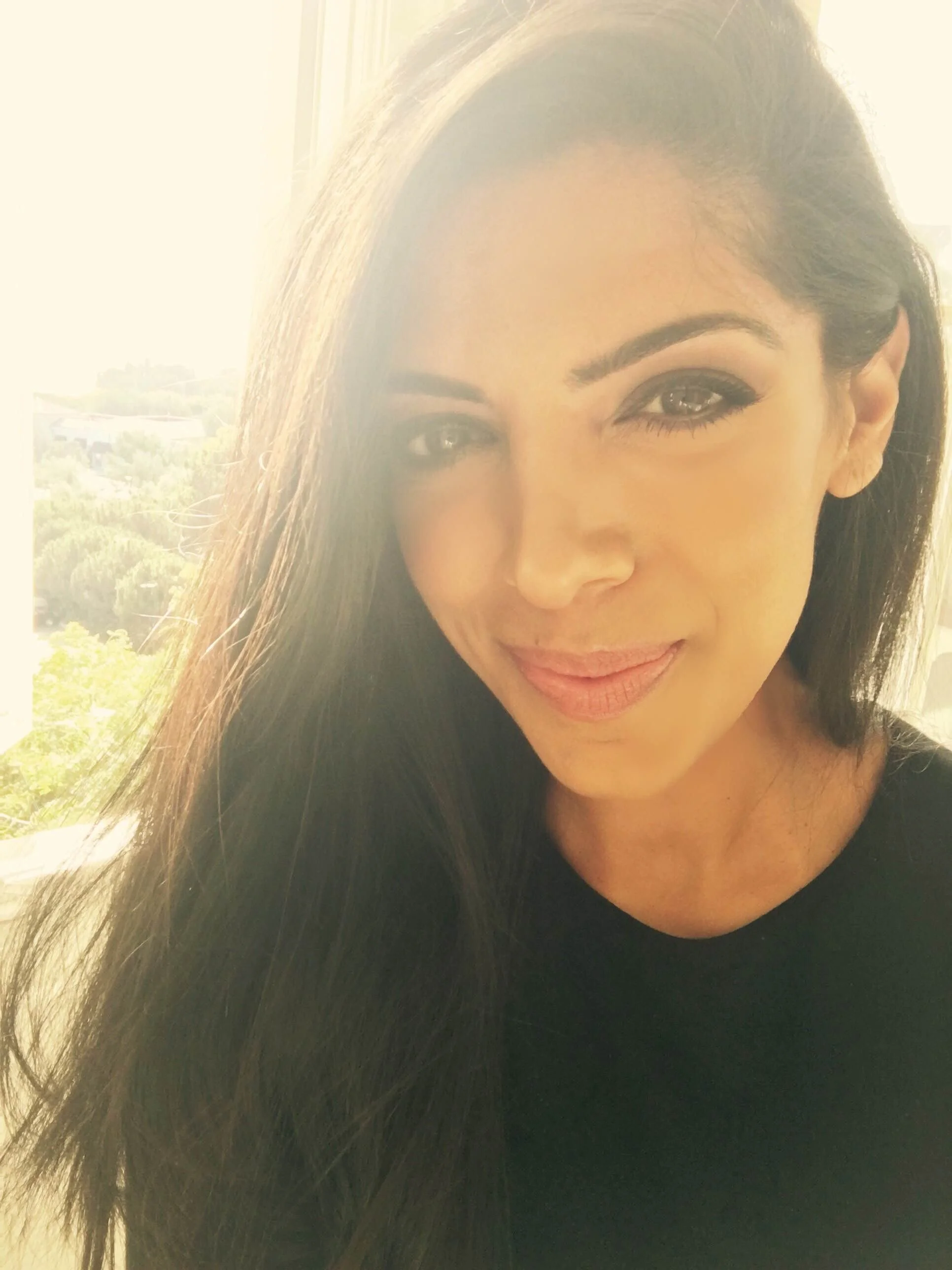
Sonya Soni is based in Brooklyn, NY but dreams in Urdu ghazals and Punjabi mustard fields. She is a writer-activist, prison abolitionist, community organizer, and most proudly the descendent of female freedom fighters from India.
From Kashmir to South Los Angeles, Sonya designs “participatory policymaking through poetry” workshops for formerly incarcerated young people and works alongside youth organizers, her greatest life teachers, to fight for more liberatory systems. She has led movement work at organizations centering community voice, from Boston University’s Center for Antiracist Research, founded by Dr. Ibram X. Kendi, to PEN America’s Prison & Justice Writing Program, resourcing the literary careers of incarcerated writers and confronting carceral censorship.
Sonya is a 2024-2025 Kweli Literary Fellow, and a 2024-2025 Bandung artist resident under the Museum of Contemporary African Diasporic Art and the Asian American Arts Alliance. Sonya graduated from the University of Southern California and Harvard University, and was a Harvard Women & Public Policy Fellow in Nepal.
Her writing and spoken word have been featured at the 2025-2026 New York Historical Society’s “The New York Sari” exhibit, Brooklyn Poets, Aangan South Asian Literary Festival, the Alfaaz Collective, and the poetry anthology “Capitalism is a Death Cult.” Sonya often writes about decolonized dreams, diasporic longing, Black-South Asian transborder solidarity, and the carceral state.